• Forum restore complete (see latest announcement thread)

Pakistan Pakistan Economy Updates

Nilgiri

Experienced member
Staff member
Administrator
Aviation Specialist
Messages
11,013
Reactions
153 22,477
Nation of residence
Canada
Nation of origin
India

ISLAMABAD:
Real estate guru, Imarat Group of Companies Chairman and Graana.com CEO Shafiq Akbar has termed real estate sector the growth engine for the country’s economy and said that given the continuity of reforms, Pakistan can become a $1.5-1.7 trillion economy by 2040.

In an interview, he stressed the need for focusing on real estate and related industries along with achieving the target of constructing one million housing units per year over the next 10 years.

After the success of its pilot project, Graana.com is introducing a more advanced real estate transaction structure, Akbar said, adding that the Imarat Group of Companies is also going to set up three new four-star hotels of leading international brands in Pakistan. Construction of Marriott Court Yard and Marriott Residence projects has already started while construction work on the third project will be contracted soon.

In addition, a Special Economic Zone (SEZ) will be set up in Islamabad and Rawalpindi for industries connected with the construction sector. Akbar said that geo-tagging and geo-mapping of government land and housing societies has been conducted across the country and digital mapping of five million out of the eight million units has also been done.

He said that the goal of the Imarat Group is to channelise annual investment of $5 billion and take Pakistan among top 40 countries in terms of transparency.

Imarat Group is setting up an industry over an area of about 2,000 canals in Pakistan in which all kinds of construction material will be produced.

Akbar called for an effective Real Estate Regulatory Authority (RERA) for the development of real estate sector and emphasised that the government should expedite work on development of RERA rules. Graana.com has started certificate-level short courses in the real estate sector for the first time in the country with the help of National University of Sciences and Technology (NUST).

About 7,000 people have completed training courses so far under the certificate programme after which it has been proposed to start a master’s degree programme in the real estate sector at NUST.

In addition, two private universities in Karachi have introduced degree programmes in the real estate sector.

Akbar told The Express Tribune that following his graduation from Pakistan, he went abroad to obtain a master’s degree from the University of Cambridge. He worked in the real estate sector of the UK for 22 years after which he returned to Pakistan in 2016 to work in his homeland. Graana.com has set up 30 offices in Pakistan and provided employment to more than 1,000 people.

Presenting an outlook of the real estate sector, Akbar said that the value of Pakistan’s planned area is $900 billion. He said that thousands of housing societies have been set up in Pakistan, however, 5,000-8,000 of them, comprising two million canals of unapproved land, have been developed. The residential area in the planned area is 75% of any country while 5% is commercial and 20% is agricultural area.

“We are bringing a very advanced real estate transaction structure,” Akbar said, adding that the Imarat Group will also issue a white paper on the problems and potential of real estate in Pakistan.

By 2040, 60-70% of Pakistan’s housing demand will be met. The right investment in Pakistan is in the real estate sector. However, 70% of the complaints on the Prime Minister’s Citizen Portal were made by overseas Pakistanis and pertained to the real estate sector.

Pakistan is ranked 73rd in the world on the Transparency Index, Akbar said while expressing hope that the country could reach the 40th position if right measures are taken with regard to construction and real estate sector. He said that Graana.com will become a billion-dollar company in 2023.

Akbar cited lack of data and information as a major problem in Pakistan. RERA, set up by the government, should be present throughout the country and should be used effectively, he said, urging Pakistan needs to build one million houses every year.

He said Pakistan would need between $25-30 billion for constructing one million houses, out of which $12 billion can be obtained from overseas Pakistanis and the rest can come from other sources.

Akbar pointed out that more than half of the population of Pakistan resides in slums and is in need of proper houses.

Published in The Express Tribune, February 23rd, 2021.
 

VCheng

Contributor
Think Tank Analyst
Messages
488
Reactions
537
Nation of residence
United States of America
Nation of origin
Pakistan

ISLAMABAD:
Real estate guru, Imarat Group of Companies Chairman and Graana.com CEO Shafiq Akbar has termed real estate sector the growth engine for the country’s economy and said that given the continuity of reforms, Pakistan can become a $1.5-1.7 trillion economy by 2040.

In an interview, he stressed the need for focusing on real estate and related industries along with achieving the target of constructing one million housing units per year over the next 10 years.

After the success of its pilot project, Graana.com is introducing a more advanced real estate transaction structure, Akbar said, adding that the Imarat Group of Companies is also going to set up three new four-star hotels of leading international brands in Pakistan. Construction of Marriott Court Yard and Marriott Residence projects has already started while construction work on the third project will be contracted soon.

In addition, a Special Economic Zone (SEZ) will be set up in Islamabad and Rawalpindi for industries connected with the construction sector. Akbar said that geo-tagging and geo-mapping of government land and housing societies has been conducted across the country and digital mapping of five million out of the eight million units has also been done.

He said that the goal of the Imarat Group is to channelise annual investment of $5 billion and take Pakistan among top 40 countries in terms of transparency.

Imarat Group is setting up an industry over an area of about 2,000 canals in Pakistan in which all kinds of construction material will be produced.

Akbar called for an effective Real Estate Regulatory Authority (RERA) for the development of real estate sector and emphasised that the government should expedite work on development of RERA rules. Graana.com has started certificate-level short courses in the real estate sector for the first time in the country with the help of National University of Sciences and Technology (NUST).

About 7,000 people have completed training courses so far under the certificate programme after which it has been proposed to start a master’s degree programme in the real estate sector at NUST.

In addition, two private universities in Karachi have introduced degree programmes in the real estate sector.

Akbar told The Express Tribune that following his graduation from Pakistan, he went abroad to obtain a master’s degree from the University of Cambridge. He worked in the real estate sector of the UK for 22 years after which he returned to Pakistan in 2016 to work in his homeland. Graana.com has set up 30 offices in Pakistan and provided employment to more than 1,000 people.

Presenting an outlook of the real estate sector, Akbar said that the value of Pakistan’s planned area is $900 billion. He said that thousands of housing societies have been set up in Pakistan, however, 5,000-8,000 of them, comprising two million canals of unapproved land, have been developed. The residential area in the planned area is 75% of any country while 5% is commercial and 20% is agricultural area.

“We are bringing a very advanced real estate transaction structure,” Akbar said, adding that the Imarat Group will also issue a white paper on the problems and potential of real estate in Pakistan.

By 2040, 60-70% of Pakistan’s housing demand will be met. The right investment in Pakistan is in the real estate sector. However, 70% of the complaints on the Prime Minister’s Citizen Portal were made by overseas Pakistanis and pertained to the real estate sector.

Pakistan is ranked 73rd in the world on the Transparency Index, Akbar said while expressing hope that the country could reach the 40th position if right measures are taken with regard to construction and real estate sector. He said that Graana.com will become a billion-dollar company in 2023.

Akbar cited lack of data and information as a major problem in Pakistan. RERA, set up by the government, should be present throughout the country and should be used effectively, he said, urging Pakistan needs to build one million houses every year.

He said Pakistan would need between $25-30 billion for constructing one million houses, out of which $12 billion can be obtained from overseas Pakistanis and the rest can come from other sources.

Akbar pointed out that more than half of the population of Pakistan resides in slums and is in need of proper houses.

Published in The Express Tribune, February 23rd, 2021.

How does further inflating the real estate bubble count as productive investment?
 

Nilgiri

Experienced member
Staff member
Administrator
Aviation Specialist
Messages
11,013
Reactions
153 22,477
Nation of residence
Canada
Nation of origin
India
How does further inflating the real estate bubble count as productive investment?

Well if its capex driven low-income housing, there is merit to the thing...as construction sector can bring lot of jobs and creates hard assets in valuable areas of a country. Theoretically if you attract lot of sound money in productive industries or investment funds directly, you can create a large job-providing sector that does not need immense training-investment...but provide a middle bulk sector for the economy. That is for example how China created even more job pull in the cities past just the initial factories.

Problem with Pakistan is the land-mafias joined at hip to each other and the DHA khakis et al., so entire effort turns into bubble and speculation quite prematurely (even for a developing country) like you describe.

I have been sensing this since a long time ago when musharaff first took power and he visited Singapore iirc (where I was at the time), and pakistan embassy produced a full multi-page feature (in a section of the Straits Times) of industry brochures complete with musharaf-isms like Pakistan will soon beat India in IT exports and will soon beat India at space launches and this and that.

Then certain folks confirmed it for me in PDF in much more grounded sectors a country really needs to get as correct as possible.

They are outnumbered heavily by the brochure-wallahs though...and droned out or banned when they mention underlying rot that is uncomfortable.
 

VCheng

Contributor
Think Tank Analyst
Messages
488
Reactions
537
Nation of residence
United States of America
Nation of origin
Pakistan
Not entirely unexpectedly, FATF decided to keep Pakistan in the grey list for now.
 

VCheng

Contributor
Think Tank Analyst
Messages
488
Reactions
537
Nation of residence
United States of America
Nation of origin
Pakistan
Well, you got your smile of the day.

Not really. It is in Pakistan's national interests to implement the FATF plan for its own benefits. What they are asking is the correct thing, and delaying it for as long as Pakistan has is increasingly counter-productive.
 

suryakiran

Active member
Messages
65
Reactions
4 111
Nation of residence
India
Nation of origin
India
Not really. It is in Pakistan's national interests to implement the FATF plan for its own benefits. What they are asking is the correct thing, and delaying it for as long as Pakistan has is increasingly counter-productive.
Here is a reality check. Most militaries and regimes globally are involved in some kind of militant promotion in some part of the globe. But, this is done as part of State policy.

But, the case with Pakistan is that individual players have started believing their own inner voice (which actually is nothing more than indoctrination) that what they are doing is in benefit of the State. At an individual level.

De-linking becomes all the more difficult when major individual players are involved in supporting recognised terrorst organisations.

if it was only the State, you could always change groups/tacts and the like. But, when your own citizens are involved in the fund raising, well...best of luck.
 

Kaptaan

Experienced member
Think Tank Analyst
Messages
1,734
Reactions
4,075
Nation of residence
United Kingdom
Nation of origin
Pakistan
Here is a reality check. Most militaries and regimes globally are involved in some kind of militant promotion in some part of the globe. But, this is done as part of State policy.

But, the case with Pakistan is that individual players have started believing their own inner voice (which actually is nothing more than indoctrination) that what they are doing is in benefit of the State. At an individual level.

De-linking becomes all the more difficult when major individual players are involved in supporting recognised terrorst organisations.

if it was only the State, you could always change groups/tacts and the like. But, when your own citizens are involved in the fund raising, well...best of luck.
10/10
 

VCheng

Contributor
Think Tank Analyst
Messages
488
Reactions
537
Nation of residence
United States of America
Nation of origin
Pakistan
Here is a reality check. Most militaries and regimes globally are involved in some kind of militant promotion in some part of the globe. But, this is done as part of State policy.

But, the case with Pakistan is that individual players have started believing their own inner voice (which actually is nothing more than indoctrination) that what they are doing is in benefit of the State. At an individual level.

De-linking becomes all the more difficult when major individual players are involved in supporting recognised terrorst organisations.

if it was only the State, you could always change groups/tacts and the like. But, when your own citizens are involved in the fund raising, well...best of luck.

Given the above, it merely reinforces what I have said earlier: It is in Pakistan's national interests to implement the FATF plan for its own benefits.
 

Saithan

Experienced member
Moderator
Denmark Correspondent
DefenceHub Diplomat
Messages
9,784
Reactions
65 21,894
Nation of residence
Denmark
Nation of origin
Turkey

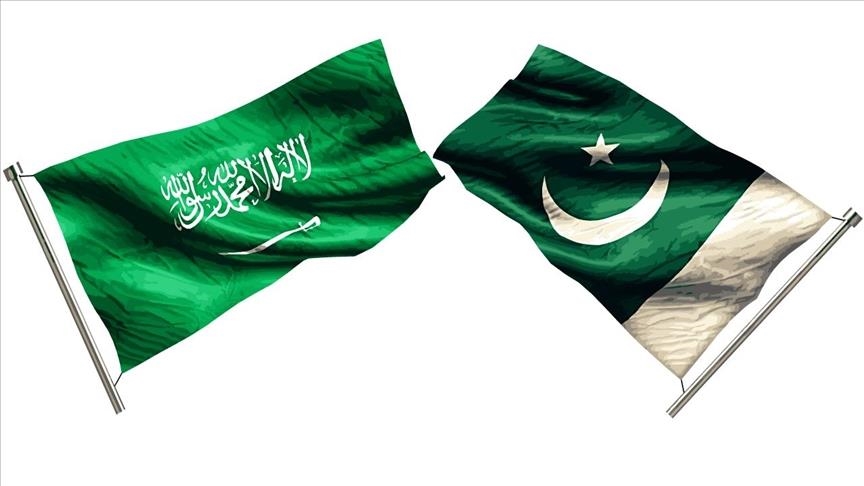
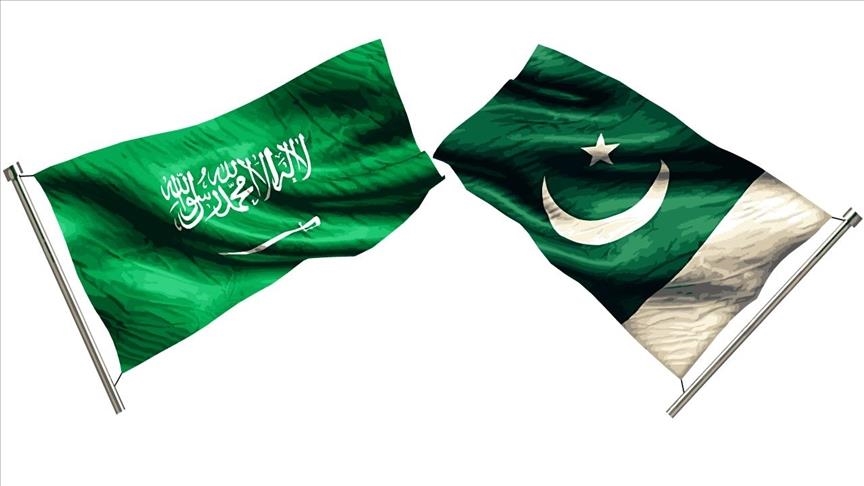
Saudi Arabia revives cash, oil support to Pakistan​

Riyadh to deposit $3B in Pakistan's central bank, give oil supplies worth $1.2B on deferred payments​

Aamir Latif |27.10.2021

Saudi Arabia revives cash, oil support to Pakistan


KARACHI, Pakistan
Saudi Arabia has revived its financial support to Pakistan to prop up the South Asian country’s tottering economy.

Riyadh will immediately deposit $3 billion into the State Bank of Pakistan (SBP) and provide oil supplies worth $1.2 billion on deferred payments, Pakistani officials confirmed late on Tuesday night.

“The Saudi Development Fund has generously announced for Pakistan an oil deferred payments facility of $1.2 bn/annum and a $3 bn deposit with SBP,” Energy Minister Hammad Azhar said on Twitter.

“This will help ease pressures on our trade & forex accounts as a result of global commodities price surge.”

The development came during Prime Minister Imran Khan’s three-day visit to Riyadh this week, who hailed Saudi Arabia for its consistent support to Islamabad.

“I want to thank HRH Prince Mohammad bin Salman for supporting Pak with $3 bn as deposit in Pak’s central bank & financing refined petroleum product with $1.2 bn,” he said on Twitter.

“KSA (Kingdom of Saudi Arabia) has always been there for Pak in our difficult times incl now when world confronts rising commodity prices.”

In 2018, Riyadh gave $3 billion in cash and a $3 billion oil facility to Pakistan to help shore up its depleted foreign exchange reserves.

However, Islamabad had to return $2 billion of the $3 billion as relations between the two allies deteriorated, mainly on the issue of the 2019 Kuala Lumpur Summit.

The summit, backed by countries including Malaysia and Turkey, was opposed by Saudi Arabia and the UAE, who viewed it as a threat to their grip on the Muslim world.
Pakistan, which was among the initial supporters of the meeting, was forced to pull out of the summit due to Riyadh’s concerns.


Lonewolf

Contributor
Messages
511
Reactions
298
Nation of residence
India
Nation of origin
India

Saudi Arabia revives cash, oil support to Pakistan​

Riyadh to deposit $3B in Pakistan's central bank, give oil supplies worth $1.2B on deferred payments​

Aamir Latif |27.10.2021

Saudi Arabia revives cash, oil support to Pakistan


KARACHI, Pakistan
Saudi Arabia has revived its financial support to Pakistan to prop up the South Asian country’s tottering economy.

Riyadh will immediately deposit $3 billion into the State Bank of Pakistan (SBP) and provide oil supplies worth $1.2 billion on deferred payments, Pakistani officials confirmed late on Tuesday night.

“The Saudi Development Fund has generously announced for Pakistan an oil deferred payments facility of $1.2 bn/annum and a $3 bn deposit with SBP,” Energy Minister Hammad Azhar said on Twitter.

“This will help ease pressures on our trade & forex accounts as a result of global commodities price surge.”

The development came during Prime Minister Imran Khan’s three-day visit to Riyadh this week, who hailed Saudi Arabia for its consistent support to Islamabad.

“I want to thank HRH Prince Mohammad bin Salman for supporting Pak with $3 bn as deposit in Pak’s central bank & financing refined petroleum product with $1.2 bn,” he said on Twitter.

“KSA (Kingdom of Saudi Arabia) has always been there for Pak in our difficult times incl now when world confronts rising commodity prices.”

In 2018, Riyadh gave $3 billion in cash and a $3 billion oil facility to Pakistan to help shore up its depleted foreign exchange reserves.

However, Islamabad had to return $2 billion of the $3 billion as relations between the two allies deteriorated, mainly on the issue of the 2019 Kuala Lumpur Summit.

The summit, backed by countries including Malaysia and Turkey, was opposed by Saudi Arabia and the UAE, who viewed it as a threat to their grip on the Muslim world.
Pakistan, which was among the initial supporters of the meeting, was forced to pull out of the summit due to Riyadh’s concerns.

If currency depreciation really helped that much then this wouldn't be required , cpec is quite successful ....


.....in setting up a debt trap .

@VCheng I wanna ask why the paki established keep planting many newbies on top position , like your nsa , your finance ministry ,these guys don't seem polished for their ministry , more into politics than duties . And Pakistan is huge country ,how come the bureaucracy detach from politics and keep the essential work on track like infra and market balance
 

VCheng

Contributor
Think Tank Analyst
Messages
488
Reactions
537
Nation of residence
United States of America
Nation of origin
Pakistan
@VCheng I wanna ask why the paki established keep planting many newbies on top position , like your nsa , your finance ministry ,these guys don't seem polished for their ministry , more into politics than duties . And Pakistan is huge country ,how come the bureaucracy detach from politics and keep the essential work on track like infra and market balance

This is by design so that there can be no competence higher than relative to the military. We look only for half-wits, so that we can manipulate the other half in our way and in our own time, the rest of the world be damned. It works quite well, but only up to a point, which is the desired outcome. @Nilgiri and I have discussed this many times.
 

Lonewolf

Contributor
Messages
511
Reactions
298
Nation of residence
India
Nation of origin
India
This is by design so that there can be no competence higher than relative to the military. We look only for half-wits, so that we can manipulate the other half in our way and in our own time, the rest of the world be damned. It works quite well, but only up to a point, which is the desired outcome. @Nilgiri and I have discussed this many times.
Isn't it creating a huge problem ,not only on economic health but on the talent too , segregation among those blind followers and one with senses will increase , that's social divide of worst category ,where competent are minority
 

Bilal Khan(Quwa) 

Active member
Think Tank Analyst
Messages
73
Reactions
3 228
Nation of residence
Canada
Nation of origin
Pakistan
This is by design so that there can be no competence higher than relative to the military. We look only for half-wits, so that we can manipulate the other half in our way and in our own time, the rest of the world be damned. It works quite well, but only up to a point, which is the desired outcome. @Nilgiri and I have discussed this many times.
This is true. The country's best talent and most capable leaders are all abroad. We have Pakistani auditors with 30+ years of experience working on MNC, TNC and public sector books, but they're in Deloitte or PW&C, not in NAB. Likewise, we have PhD professors and R&D engineers working in US and UK aerospace, but not at SUPARCO or PAC. Unfortunately, these people don't tolerate half-day workweeks, 45-minute chai breaks, segregation between "officers" and "others" and mediocrity in product or output, so the Pakistani system rejects them. OTOH, Americans, British and even Indians are cultivating those Pakistanis into leaders.
 

Lonewolf

Contributor
Messages
511
Reactions
298
Nation of residence
India
Nation of origin
India
This is true. The country's best talent and most capable leaders are all abroad. We have Pakistani auditors with 30+ years of experience working on MNC, TNC and public sector books, but they're in Deloitte or PW&C, not in NAB. Likewise, we have PhD professors and R&D engineers working in US and UK aerospace, but not at SUPARCO or PAC. Unfortunately, these people don't tolerate half-day workweeks, 45-minute chai breaks, segregation between "officers" and "others" and mediocrity in product or output, so the Pakistani system rejects them. OTOH, Americans, British and even Indians are cultivating those Pakistanis into leaders.
Indians ??? I thought people across border are not allowed here , you mean non resident indian ??
 

Nilgiri

Experienced member
Staff member
Administrator
Aviation Specialist
Messages
11,013
Reactions
153 22,477
Nation of residence
Canada
Nation of origin
India
Indians ??? I thought people across border are not allowed here , you mean non resident indian ??

Yes Indians in western shores work alongside Pak counterparts in a lot of diverse fields.
 

Nilgiri

Experienced member
Staff member
Administrator
Aviation Specialist
Messages
11,013
Reactions
153 22,477
Nation of residence
Canada
Nation of origin
India
This is by design so that there can be no competence higher than relative to the military. We look only for half-wits, so that we can manipulate the other half in our way and in our own time, the rest of the world be damned. It works quite well, but only up to a point, which is the desired outcome. @Nilgiri and I have discussed this many times.

Another tweet that aged well:


VCheng

Contributor
Think Tank Analyst
Messages
488
Reactions
537
Nation of residence
United States of America
Nation of origin
Pakistan
Isn't it creating a huge problem ,not only on economic health but on the talent too , segregation among those blind followers and one with senses will increase , that's social divide of worst category ,where competent are minority

Is that a problem? :D
 

VCheng

Contributor
Think Tank Analyst
Messages
488
Reactions
537
Nation of residence
United States of America
Nation of origin
Pakistan
This is true. The country's best talent and most capable leaders are all abroad. We have Pakistani auditors with 30+ years of experience working on MNC, TNC and public sector books, but they're in Deloitte or PW&C, not in NAB. Likewise, we have PhD professors and R&D engineers working in US and UK aerospace, but not at SUPARCO or PAC. Unfortunately, these people don't tolerate half-day workweeks, 45-minute chai breaks, segregation between "officers" and "others" and mediocrity in product or output, so the Pakistani system rejects them. OTOH, Americans, British and even Indians are cultivating those Pakistanis into leaders.

These are only some of the intended results by conscious design that is nourished with a lot of attention.
 

Bilal Khan(Quwa) 

Active member
Think Tank Analyst
Messages
73
Reactions
3 228
Nation of residence
Canada
Nation of origin
Pakistan
This. Shoaib Akhtar went through the exact experience of every competent Pakistani. What you see here is what happens in our institutions, armed forces, academia, political parties, and so on. If this is how you treat the subject matter experts, then, of course, you're not going to succeed. The stupidity at play was so overwhelming Shoaib Akhtar could only walk away. That, folks, is the story of competent Pakistanis in a nutshell. @Nilgiri @VCheng @Lonewolf

 
Top Bottom