
Latest Thread
- Analysis Turkic joint military model
- CYBINT/DNINT U.S. Probes Cyberattacks on Energy Tankers Bound for American Coast
- Pilatus Aircraft - Switzerland 🇨🇭
- Defence Q&A How will tank armour evolve in the next 25 years?
- Breaking News Rumours - Israel sent a proposal to Ankara to divide Syria into zones of influence, this was rejected by Türkiye
You are using an out of date browser. It may not display this or other websites correctly.
You should upgrade or use an alternative browser.
You should upgrade or use an alternative browser.


Depends on the receiving antenna. It can jam if it is omnidirectional antenna like you have on your phone. It will not jam if it directional antenna like your satellite dish antenna.Can the alrborne electronic attack planes like compass call,or Turkish hava soj can disrupt links beteen satallite and UAV?.


Bro, how are they going to fly a flying wing in supersonic domain? Anka-3 is a flying wing. The wing thickness will have to be so thin that it is not feasible for constructional stability if supersonic flight is expected from a flying wing.
A sans vertical stabiliser delta wing design, may be! Then you have the lack of control surfaces to give you manoeuvrability. But it is then possible. But that won’t be Anka-3.
There are NO supersonic flying wings in real life. Both Chinese H20 and B21 are subsonic aircrafts.
When some of our officials says that they are developing a supersonic flying wing, I feel like they don’t know what they’re talking about. Either that, or they say it for propaganda purposes. When I hear flying wing, the first things that comes to my mind are stealth and range. If for some reason you want your flying wing to be supersonic, you most probably need to put engines with afterburners on it. But then you are compromising the most important attributs I wrote above, which is stealth and range.

Anka-3 is seen as both a military asset and a testing platform for cracking new technologies (stealth, sensor positioning, flying wing stability). Maybe TUSAS will add wing tip control surfaces, maybe TUSAS will use active controlling with targeted jets on control surfaces, or maybe 2D,3D vectoring will come into the picture. TUSAS wants a highly stealth wingman that can supercruise together with KAAN. The latest idea was to turn Anka-3 into a dual-engine aircraft with stronger engines.Bro, how are they going to fly a flying wing in supersonic domain? Anka-3 is a flying wing. The wing thickness will have to be so thin that it is not feasible for constructional stability if supersonic flight is expected from a flying wing.
A sans vertical stabiliser delta wing design, may be! Then you have the lack of control surfaces to give you manoeuvrability. But it is then possible. But that won’t be Anka-3.
There are NO supersonic flying wings in real life. Both Chinese H20 and B21 are subsonic aircrafts.
Last edited:


Not necessarily bro!If for some reason you want your flying wing to be supersonic, you most probably need to put engines with afterburners on it
An aircraft can go supersonic without afterburners. (Supercruise). All you need is diverging nozzles. When the nozzle opens up the air going through it becomes supersonic.
In fact it is possible to go low supersonic without diverging nozzles for a short while.
Bro, those are a lot of “may be”s !Maybe TUSAS will add wing tip control surfaces, maybe TUSAS will use active controlling with targeted jets on control surfaces, or maybe 2D,3D vectoring….
But it doesn’t detract from the fact that technically, due to below stated primary reasons taken from various articles, it just isn’t feasible to build supersonic flying wings:
1. High Drag:
A flying wing design is inherently low drag, which integrates the fuselage and the wing into a single thick airfoil shape. This results in a large frontal area. Although this is efficient for subsonic flight, it creates significant wave drag as it approaches and exceeds the speed of sound, which requires enormous power to overcome.
2. Aerodynamic Instability:
Supersonic and subsonic aerodynamics are very different. At transonic and supersonic speeds, the centre of pressure makes the aircraft very unstable and difficult to control. Flying wings don‘t have vertical and horizontal stabilizers which are critical for stability and control at supersonic speeds.
3. Design Compromises:
To overcome the drag and stability issues at supersonic speeds, a wing must be very thin and long, like the ones on the Concorde or military jets. Such a design, however, performs poorly at low speeds (takeoff and landing), requiring a high angle of attack and faster landing speeds. A "flying wing" design optimized for cargo or passenger capacity (deep and thick) inherently compromises the sleek, low-drag shape needed for supersonic flight.
4. Control Surface Challenges:
The shock waves that form at supersonic speeds can make conventional control surfaces, especially at the wingtips, ineffective or even cause them to produce the opposite of the intended response, leading to potential structural failure and loss of control.
So consequentially, the complex engineering that is needed make it impractical and close to impossible to design a stable and efficient flying wing that is capable of sustained supersonic speeds without structural deficiencies.
The only technically viable solution to this dilemma is a biderectional flying wing that is described in NASA’s related article. This aircraft can go supersonic in fig 8 flight. And subsonic in fig 9 flight. In other words it has to swivel round to go supersonic or subsonic.
Not necessarily bro!
An aircraft can go supersonic without afterburners. (Supercruise). All you need is diverging nozzles. When the nozzle opens up the air going through it becomes supersonic.
In fact it is possible to go low supersonic without diverging nozzles for a short while.
You’re right, an aircraft can supercruise, but what about a fully loaded Anka-3 with one TF-10000 ? Do you think it can realistically supercruise or will it need it’s afterburner ?

Bro, designwise Anka-3 is a flying wing. It can’t supercruise. Full stop.You’re right, an aircraft can supercruise, but what about a fully loaded Anka-3 with one TF-10000 ? Do you think it can realistically supercruise or will it need it’s afterburner ?
It can not go supersonic. Full stop.
It doesn’t matter what engine you put on it. It is designed as a subsonic plane. If you install TF10000 engine on to Anka-3, it‘s afterburner will help it with taking off whilst carrying more weight or from a shorter runway. It can’t make it go supersonic.
I am familiar with all the points you made, and I read the bi-directional flying wing paper when it was released. However, I keep hearing that Anka 3 will go supersonic, and TUSAS is working on something. If you look at ANKA-3, it is not a conventional flying wing design. It is a delta wing flying wing hybrid. It looks like a triangle/big single piece of delta wing, with an aggressive sweep angle. An aggressive sweep angle is related to higher speeds. There are surely big questions to be answered, but i keep hearing this from multiple sources, both popular sources and sources inside the industry, that can't all be lying at the same time.Not necessarily bro!
An aircraft can go supersonic without afterburners. (Supercruise). All you need is diverging nozzles. When the nozzle opens up the air going through it becomes supersonic.
In fact it is possible to go low supersonic without diverging nozzles for a short while.
Bro, those are a lot of “may be”s !
But it doesn’t detract from the fact that technically, due to below stated primary reasons taken from various articles, it just isn’t feasible to build supersonic flying wings:
1. High Drag:
A flying wing design is inherently low drag, which integrates the fuselage and the wing into a single thick airfoil shape. This results in a large frontal area. Although this is efficient for subsonic flight, it creates significant wave drag as it approaches and exceeds the speed of sound, which requires enormous power to overcome.
2. Aerodynamic Instability:
Supersonic and subsonic aerodynamics are very different. At transonic and supersonic speeds, the centre of pressure makes the aircraft very unstable and difficult to control. Flying wings don‘t have vertical and horizontal stabilizers which are critical for stability and control at supersonic speeds.
3. Design Compromises:
To overcome the drag and stability issues at supersonic speeds, a wing must be very thin and long, like the ones on the Concorde or military jets. Such a design, however, performs poorly at low speeds (takeoff and landing), requiring a high angle of attack and faster landing speeds. A "flying wing" design optimized for cargo or passenger capacity (deep and thick) inherently compromises the sleek, low-drag shape needed for supersonic flight.
4. Control Surface Challenges:
The shock waves that form at supersonic speeds can make conventional control surfaces, especially at the wingtips, ineffective or even cause them to produce the opposite of the intended response, leading to potential structural failure and loss of control.
So consequentially, the complex engineering that is needed make it impractical and close to impossible to design a stable and efficient flying wing that is capable of sustained supersonic speeds without structural deficiencies.
The only technically viable solution to this dilemma is a biderectional flying wing that is described in NASA’s related article. This aircraft can go supersonic in fig 8 flight. And subsonic in fig 9 flight. In other words it has to swivel round to go supersonic or subsonic.
View attachment 78630
The rumored aircraft is supposed to have a dual engine setup, over 2x thrust and up to %30 increased MTOW. Supersonic cruise target is Mach 1.2-1.3.
Chinese CH-7
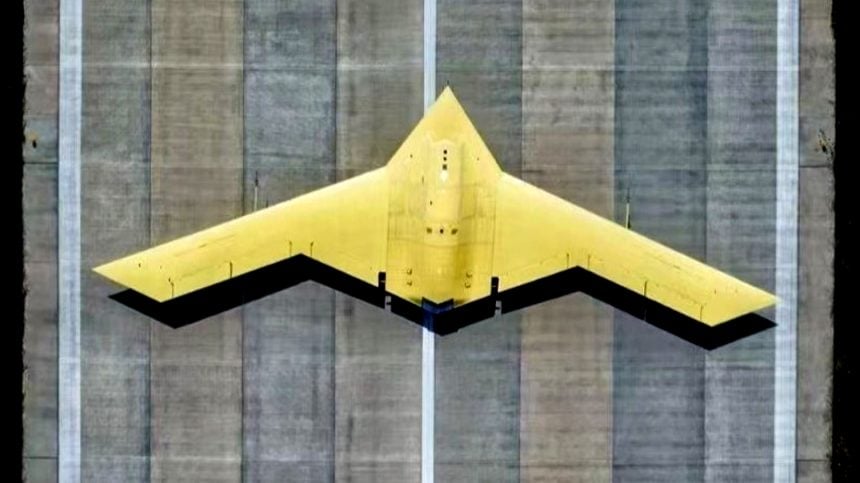
B-2 Spirit B-21 Raider

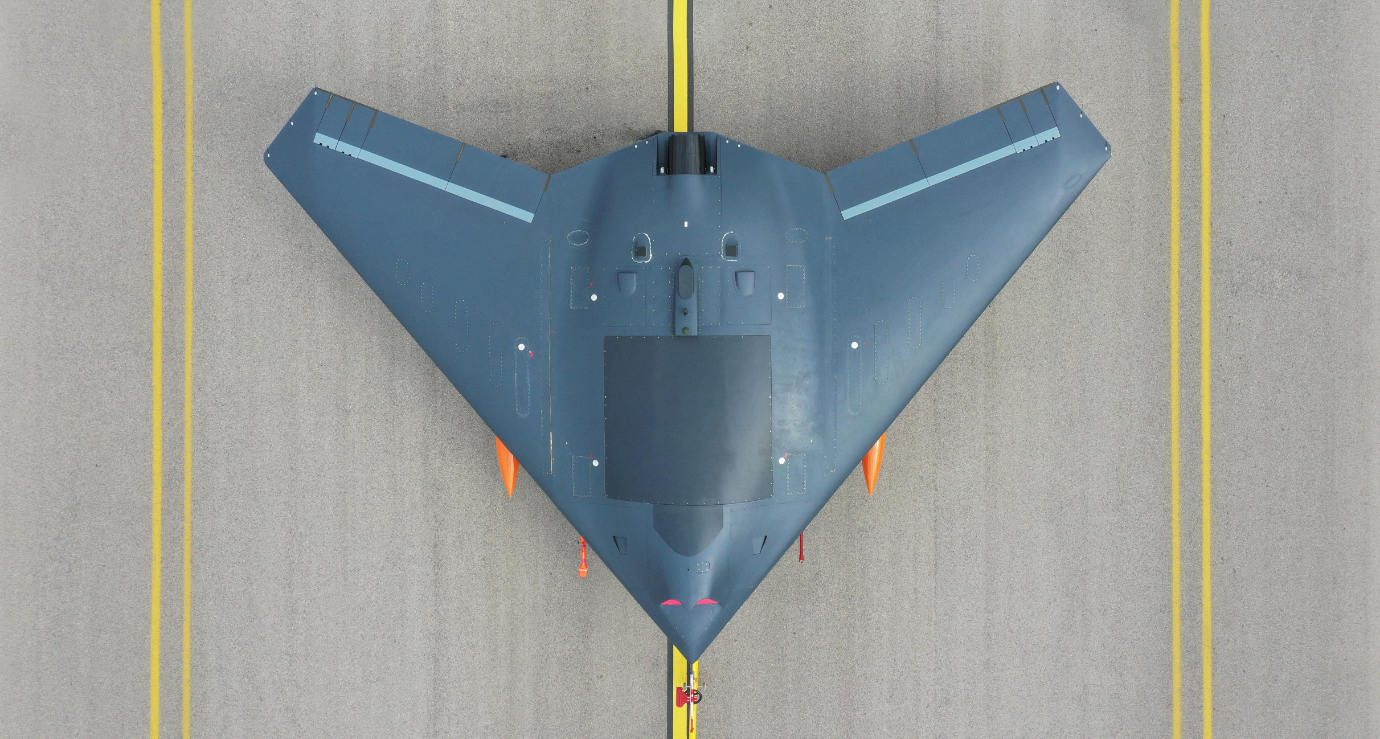
Anka 3

The Chinese CH-7 UCAV will have a longer range thanks to its wide wingspan, more fuel, and possibly a larger ammunition capacity in the mid-fuselage. This design seems like a logical design for stealth aircraft.I am familiar with all the points you made, and I read the bi-directional flying wing paper when it was released. However, I keep hearing that Anka 3 will go supersonic, and TUSAS is working on something. If you look at ANKA-3, it is not a conventional flying wing design. It is a delta wing flying wing hybrid. It looks like a triangle/big single piece of delta wing, with an aggressive sweep angle. An aggressive sweep angle is related to higher speeds. There are surely big questions to be answered, but i keep hearing this from multiple sources, both popular sources and sources inside the industry, that can't all be lying at the same time.
The rumored aircraft is supposed to have a dual engine setup, over 2x thrust and up to %30 increased MTOW. Supersonic cruise target is Mach 1.2-1.3.
Chinese CH-7
B-2 Spirit B-21 Raider
Anka 3

As the new year approaches, I felt like making a new style for the infographics too
I have observed the Turkish munition-dropping UAVs over the course of two years at exhibitions, and I can say that there is a good amount of those cloning the exact same layout from Ukraine War while some others are adding their own touches and DUMRUL is a good example.
Aside from helicopter handling, it is still light enough to be carried easily by mobile units, maybe even easier than multicopter UAVs as it is quite sleek when stowed.
In addition to mortar rounds, it can carry METE missiles for surgical hits at long range (that is by the standards of small armed UAVs), TİTRA stated that it has been integrated to DUMRUL.
Or if you want some more sustained close range support, you can slap a revolving grenade launcher under.
Then we have a really unconventional answer to jamming as navigation by laser marking a location and FPV control option for comfortable direction
Did not make an infograhpic for it yet but BOYGA-B with the option to carry TUNGA smart munition with TV/IR seeker and KARGU FPV options is another honorable mention in terms of building on the concept.
I can see where you are coming from. Anka -3 is not as wide as standard flying wing. It is more compact and a bit closer to a delta wing. But not quite. If you check the frontal exposed surface thicknesses of Anka-3 it is substantially thick. Even the end part of the wings are quite thick. That would cause so much drag related stress on the design that would give it problems if it tried to go.supersonic.I am familiar with all the points you made, and I read the bi-directional flying wing paper when it was released. However, I keep hearing that Anka 3 will go supersonic, and TUSAS is working on something. If you look at ANKA-3, it is not a conventional flying wing design. It is a delta wing flying wing hybrid. It looks like a triangle/big single piece of delta wing, with an aggressive sweep angle. An aggressive sweep angle is related to higher speeds. There are surely big questions to be answered, but i keep hearing this from multiple sources, both popular sources and sources inside the industry, that can't all be lying at the same time.
The rumored aircraft is supposed to have a dual engine setup, over 2x thrust and up to %30 increased MTOW. Supersonic cruise target is Mach 1.2-1.3.
Chinese CH-7
B-2 Spirit B-21 Raider
Anka 3
Anka3 pic B
Yet if you check out the Boeing’s NGAD supersonic design, the edges are tapered thin and especially towards the tail the front edges are thin and streamlined to allow supersonic flight.
NGAD Pic 4
(If you compare Anka3 pic B and NGAD pic 4 pictures, back end has similarities. But NGAD’s it‘s front is elongated and streamlined. Plus edges of extremities are well tapered.)
Now, if they pull the nose of Anka-3 forward and streamline it with thin edges like that, then it can be possible to create something out of Anka-3 that can fly supersonic.
But that will be Anka-4, not Anka-3 especially if they are going to add a second engine too.
We will see in due course, if that will happen.

Pokemonte13
Contributor


Actually, this makes a lot of senseWe know that ANKA-3 project started based on Boeing's UCAV Model 1303.
Now look what i have found.
Numerical study of geometric morphing wings of the 1303 UCAV

Why? What makes Ghost Bat more stealth?I have still problems with the design of Kizilelma. It doesn’t look “LO enough “ , less matured. Try to compare it with Ghost Bat.


As common knowledge canard may considered as an effecting factor in LO ... surface finishing is important as well (concerning surface finishing so far we have seen prototypes and ''production prototypes'' (KIZILELMA PT-series ) not wise to expect Boeing or TAI (once assigned to manufacture center fuselages of F 35 and now KAAN) manufacruring standards from Baykar overnight.I have still problems with the design of Kizilelma. It doesn’t look “LO enough “ , less matured. Try to compare it with Ghost Bat.
all aspect stealth and low RSC from all directions should be an expensive masterpiece... may not worth it for an unmanned platform.
Further, our requirements and our reality or the role we envisioned for KIZILELM may defintly be different from requirements which created Ghost Bat or other projects.
we can assume that path of lower RCS from certain direction(s) has been followed and/or prioritized for KIZILELMA
AND eventhough we have never heard a single word about it, Luneburg lenses on KIZILELMA is definitly a good sign

Last edited:
Current Kızılelme isn't the final form of Kızılelma.
First, Ghost Bat looks from one piece. Second, the Air intake and fuselage looks seamless. Third, all the visible screws and rivets on Kizilelma. Fourth, the Radome is more flush mounted and less straight like be Kizilelma. And some more points I could count if you want?..Why? What makes Ghost Bat more stealth?
I thought that’s the final design of mass production.Current Kızılelme isn't the final form of Kızılelma.


