• Forum restore complete (see latest announcement thread)

TR UAV/UCAV Programs | Anka - series | Kızılelma | TB - series

Nutuk

Contributor
Think Tank Analyst
Messages
1,086
Reactions
12 3,864
Nation of residence
Nethelands
Nation of origin
Turkey
True, a couple of years ago we also did not know about ANKA-3 and they suddenly showed a flying model.

If former CEO of TAI talked about ANKA-4 development, retired generals talk about ANKA-4 development I am inclined to believe that development is ongoing.

There is now info dripping in that the delivery of EF2000 (new ones) is 2030. Makes my allergy spike!
 

boredaf

Experienced member
Messages
2,271
Solutions
1
Reactions
42 6,661
Nation of residence
United Kingdom
Nation of origin
Turkey
If former CEO of TAI talked about ANKA-4 development, retired generals talk about ANKA-4 development I am inclined to believe that development is ongoing.
Temel Kotil also said they were going to deliver T-929 to the army this year. New ceo said they were going to deliver 10 Hürkuş to air force this year. Not only they are salesmen talking about their products but also defence industry is highly politicised in our country and used as a propaganda machine.

What they are doing is no different than what other arms of propaganda machines do, tell a lie then publish a retraction; a retraction will never, ever be seen by the same number of people who have seen your lie, so, you're in the clear.
 

TheInsider

Experienced member
Professional
Messages
4,894
Solutions
1
Reactions
51 17,040
Nation of residence
Turkey
Nation of origin
Turkey
As far as I know, the real Anka-4 is on the back burner. There is a bigger supersonic version of Anka-3 on the pipeline, but not on the short term.
 

Iskander

Contributor
Think Tank Analyst
Messages
1,111
Reactions
21 2,877
Age
65
Nation of residence
Azerbaijan
Nation of origin
Azerbaijan
As far as I know, the real Anka-4 is on the back burner. There is a bigger supersonic version of Anka-3 on the pipeline, but not on the short term.

Such? 😇

1765856670680.jpeg


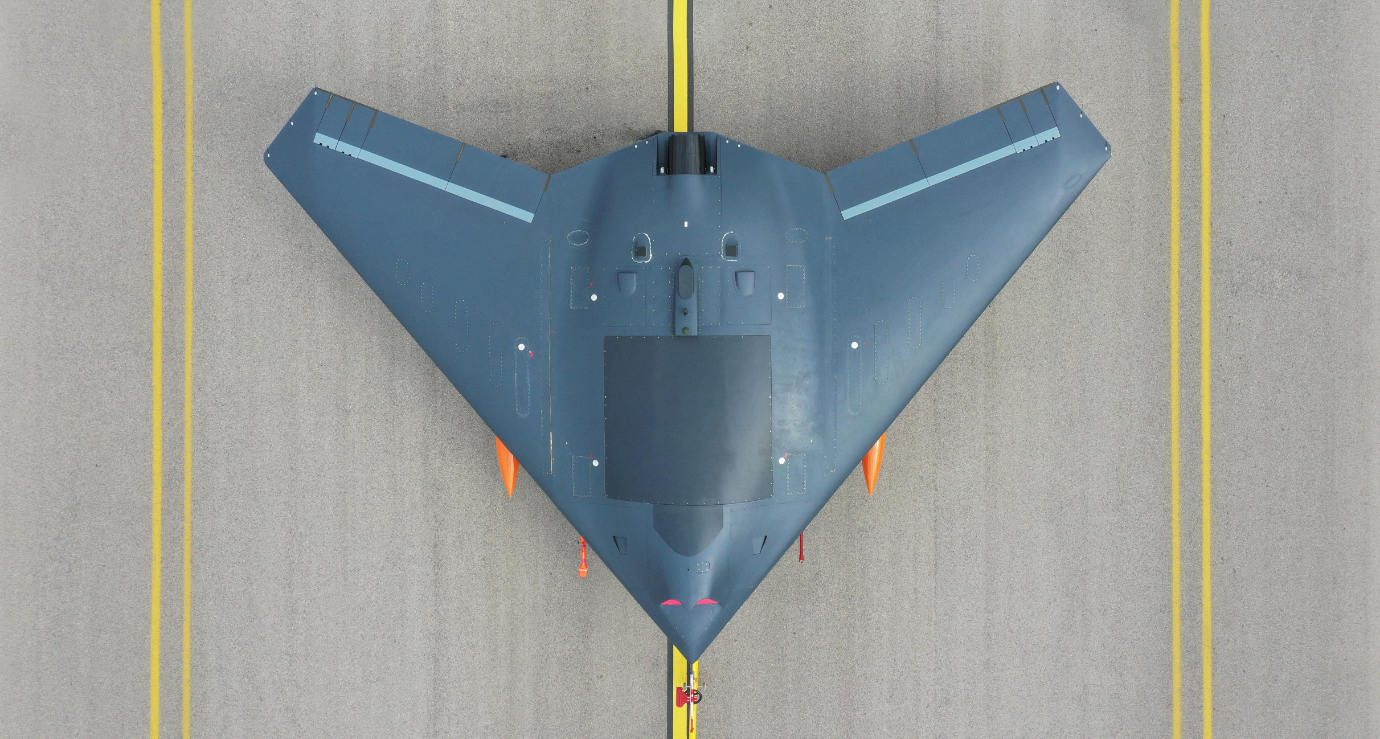
The Anka-3 is a great aircraft.
But I think one day you'll have to build an Anka with larger parameters. I'm not talking about the 100-ton Spirit, but something bigger than the Anka-3. There is an empty niche there.

 
Last edited:

boredaf

Experienced member
Messages
2,271
Solutions
1
Reactions
42 6,661
Nation of residence
United Kingdom
Nation of origin
Turkey

Afif

Experienced member
Moderator
Bangladesh Correspondent
DefenceHub Diplomat
Bangladesh Moderator
Messages
5,139
Reactions
104 10,047
Nation of residence
Bangladesh
Nation of origin
Bangladesh
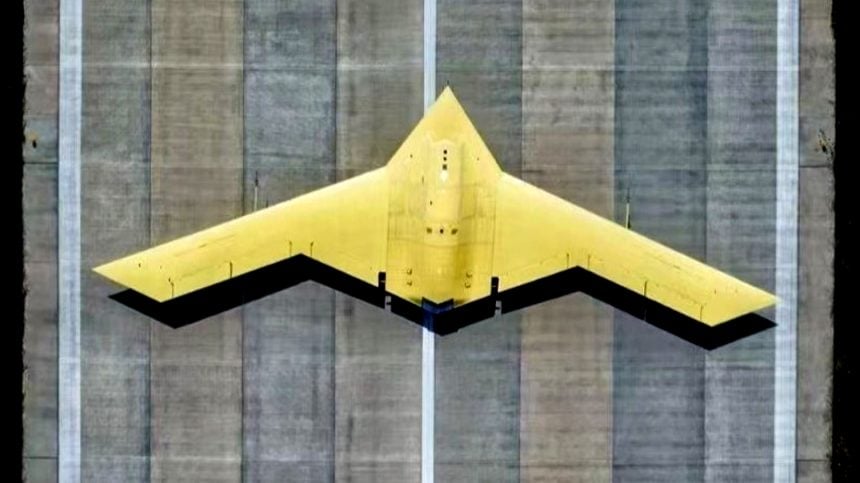
Chinese just flew their flying wing drone that is bigger than Anka-3.

To be accurate, it's been flying since 2013. Recent footage released of production variant is a commemoration of its commissioning with PLAAF unit.

Something like that from TAI would require a bigger engine. Like F110. Other than the engine issue, there is no reason why Tusas couldn't get it done.
 

boredaf

Experienced member
Messages
2,271
Solutions
1
Reactions
42 6,661
Nation of residence
United Kingdom
Nation of origin
Turkey
Something like that from TAI would require a bigger engine. Like F110. Other than the engine issue, there is no reason why Tusas couldn't get it done.
I agree, I just mentioned the Chinese drone as an example. We really need to start developing our drones/ships/planes/whatever around engines, rather than the other way around.
 

Zafer

Experienced member
Messages
5,654
Reactions
15 8,712
Nation of residence
Turkey
Nation of origin
Turkey
What if an early crop of the TF35000 engine get used on unmanned bombers long before they fly on Kaan :unsure: this can effect every other acquisition
 
Last edited:

Iskander

Contributor
Think Tank Analyst
Messages
1,111
Reactions
21 2,877
Age
65
Nation of residence
Azerbaijan
Nation of origin
Azerbaijan
What if an early crop of the TF35000 engine get used on unmanned bombers long before they fly on Kaan :unsure: this can effect every other acquisition
When testing a new engine, the Russians remove one engine from a twin-engine aircraft and install the engine being tested in its place.
 

Zafer

Experienced member
Messages
5,654
Reactions
15 8,712
Nation of residence
Turkey
Nation of origin
Turkey
When testing a new engine, the Russians remove one engine from a twin-engine aircraft and install the engine being tested in its place.

I don't mean for testing I mean before the engine is matured to a human rated state it can be used to power a twin engine 35 ton stealth bomber. One might argue that we don't have a big use case for it but if we are not paying top dollar for them we might as well make them as they can be top stealthy making a difference, giving additional capability.
 

Yasar_TR

Experienced member
Staff member
Administrator
Messages
4,280
Reactions
263 22,349
Nation of residence
United Kingdom
Nation of origin
Turkey
As far as I know, the real Anka-4 is on the back burner. There is a bigger supersonic version of Anka-3 on the pipeline, but not on the short term.
Bro, how are they going to fly a flying wing in supersonic domain? Anka-3 is a flying wing. The wing thickness will have to be so thin that it is not feasible for constructional stability if supersonic flight is expected from a flying wing.

A sans vertical stabiliser delta wing design, may be! Then you have the lack of control surfaces to give you manoeuvrability. But it is then possible. But that won’t be Anka-3.

There are NO supersonic flying wings in real life. Both Chinese H20 and B21 are subsonic aircrafts.
 

zio

Contributor
Messages
531
Reactions
11 801
Nation of residence
Turkey
Nation of origin
Turkey
Can the alrborne electronic attack planes like compass call,or Turkish hava soj can disrupt links beteen satallite and UAV?.
 

Kitra

Active member
Messages
146
Reactions
5 366
Nation of residence
Sweden
Nation of origin
Turkey
Can the alrborne electronic attack planes like compass call,or Turkish hava soj can disrupt links beteen satallite and UAV?.
Depends on the receiving antenna. It can jam if it is omnidirectional antenna like you have on your phone. It will not jam if it directional antenna like your satellite dish antenna.
 

I_Love_F16

Contributor
France Correspondent
Messages
932
Reactions
18 2,004
Nation of residence
France
Nation of origin
France
Bro, how are they going to fly a flying wing in supersonic domain? Anka-3 is a flying wing. The wing thickness will have to be so thin that it is not feasible for constructional stability if supersonic flight is expected from a flying wing.

A sans vertical stabiliser delta wing design, may be! Then you have the lack of control surfaces to give you manoeuvrability. But it is then possible. But that won’t be Anka-3.

There are NO supersonic flying wings in real life. Both Chinese H20 and B21 are subsonic aircrafts.

When some of our officials says that they are developing a supersonic flying wing, I feel like they don’t know what they’re talking about. Either that, or they say it for propaganda purposes. When I hear flying wing, the first things that comes to my mind are stealth and range. If for some reason you want your flying wing to be supersonic, you most probably need to put engines with afterburners on it. But then you are compromising the most important attributs I wrote above, which is stealth and range.
 

TheInsider

Experienced member
Professional
Messages
4,894
Solutions
1
Reactions
51 17,040
Nation of residence
Turkey
Nation of origin
Turkey
Bro, how are they going to fly a flying wing in supersonic domain? Anka-3 is a flying wing. The wing thickness will have to be so thin that it is not feasible for constructional stability if supersonic flight is expected from a flying wing.

A sans vertical stabiliser delta wing design, may be! Then you have the lack of control surfaces to give you manoeuvrability. But it is then possible. But that won’t be Anka-3.

There are NO supersonic flying wings in real life. Both Chinese H20 and B21 are subsonic aircrafts.
Anka-3 is seen as both a military asset and a testing platform for cracking new technologies (stealth, sensor positioning, flying wing stability). Maybe TUSAS will add wing tip control surfaces, maybe TUSAS will use active controlling with targeted jets on control surfaces, or maybe 2D,3D vectoring will come into the picture. TUSAS wants a highly stealth wingman that can supercruise together with KAAN. The latest idea was to turn Anka-3 into a dual-engine aircraft with stronger engines.
 
Last edited:

Yasar_TR

Experienced member
Staff member
Administrator
Messages
4,280
Reactions
263 22,349
Nation of residence
United Kingdom
Nation of origin
Turkey
If for some reason you want your flying wing to be supersonic, you most probably need to put engines with afterburners on it
Not necessarily bro!
An aircraft can go supersonic without afterburners. (Supercruise). All you need is diverging nozzles. When the nozzle opens up the air going through it becomes supersonic.
In fact it is possible to go low supersonic without diverging nozzles for a short while.

Maybe TUSAS will add wing tip control surfaces, maybe TUSAS will use active controlling with targeted jets on control surfaces, or maybe 2D,3D vectoring….
Bro, those are a lot of “may be”s !
But it doesn’t detract from the fact that technically, due to below stated primary reasons taken from various articles, it just isn’t feasible to build supersonic flying wings:

1. High Drag:
A flying wing design is inherently low drag, which integrates the fuselage and the wing into a single thick airfoil shape. This results in a large frontal area. Although this is efficient for subsonic flight, it creates significant wave drag as it approaches and exceeds the speed of sound, which requires enormous power to overcome.

2. Aerodynamic Instability:
Supersonic and subsonic aerodynamics are very different. At transonic and supersonic speeds, the centre of pressure makes the aircraft very unstable and difficult to control. Flying wings don‘t have vertical and horizontal stabilizers which are critical for stability and control at supersonic speeds.

3. Design Compromises:
To overcome the drag and stability issues at supersonic speeds, a wing must be very thin and long, like the ones on the Concorde or military jets. Such a design, however, performs poorly at low speeds (takeoff and landing), requiring a high angle of attack and faster landing speeds. A "flying wing" design optimized for cargo or passenger capacity (deep and thick) inherently compromises the sleek, low-drag shape needed for supersonic flight.

4. Control Surface Challenges:
The shock waves that form at supersonic speeds can make conventional control surfaces, especially at the wingtips, ineffective or even cause them to produce the opposite of the intended response, leading to potential structural failure and loss of control.

So consequentially, the complex engineering that is needed make it impractical and close to impossible to design a stable and efficient flying wing that is capable of sustained supersonic speeds without structural deficiencies.

The only technically viable solution to this dilemma is a biderectional flying wing that is described in NASA’s related article. This aircraft can go supersonic in fig 8 flight. And subsonic in fig 9 flight. In other words it has to swivel round to go supersonic or subsonic.

1765903558816.jpeg


I_Love_F16

Contributor
France Correspondent
Messages
932
Reactions
18 2,004
Nation of residence
France
Nation of origin
France
Not necessarily bro!
An aircraft can go supersonic without afterburners. (Supercruise). All you need is diverging nozzles. When the nozzle opens up the air going through it becomes supersonic.
In fact it is possible to go low supersonic without diverging nozzles for a short while.

You’re right, an aircraft can supercruise, but what about a fully loaded Anka-3 with one TF-10000 ? Do you think it can realistically supercruise or will it need it’s afterburner ?
 

Zafer

Experienced member
Messages
5,654
Reactions
15 8,712
Nation of residence
Turkey
Nation of origin
Turkey
They made Anka3 pointier than the typical wing plane, it is inevitable it gets some speed tickets down the road.
 

Yasar_TR

Experienced member
Staff member
Administrator
Messages
4,280
Reactions
263 22,349
Nation of residence
United Kingdom
Nation of origin
Turkey
You’re right, an aircraft can supercruise, but what about a fully loaded Anka-3 with one TF-10000 ? Do you think it can realistically supercruise or will it need it’s afterburner ?
Bro, designwise Anka-3 is a flying wing. It can’t supercruise. Full stop.
It can not go supersonic. Full stop.
It doesn’t matter what engine you put on it. It is designed as a subsonic plane. If you install TF10000 engine on to Anka-3, it‘s afterburner will help it with taking off whilst carrying more weight or from a shorter runway. It can’t make it go supersonic.
 

TheInsider

Experienced member
Professional
Messages
4,894
Solutions
1
Reactions
51 17,040
Nation of residence
Turkey
Nation of origin
Turkey
Not necessarily bro!
An aircraft can go supersonic without afterburners. (Supercruise). All you need is diverging nozzles. When the nozzle opens up the air going through it becomes supersonic.
In fact it is possible to go low supersonic without diverging nozzles for a short while.


Bro, those are a lot of “may be”s !
But it doesn’t detract from the fact that technically, due to below stated primary reasons taken from various articles, it just isn’t feasible to build supersonic flying wings:

1. High Drag:
A flying wing design is inherently low drag, which integrates the fuselage and the wing into a single thick airfoil shape. This results in a large frontal area. Although this is efficient for subsonic flight, it creates significant wave drag as it approaches and exceeds the speed of sound, which requires enormous power to overcome.

2. Aerodynamic Instability:
Supersonic and subsonic aerodynamics are very different. At transonic and supersonic speeds, the centre of pressure makes the aircraft very unstable and difficult to control. Flying wings don‘t have vertical and horizontal stabilizers which are critical for stability and control at supersonic speeds.

3. Design Compromises:
To overcome the drag and stability issues at supersonic speeds, a wing must be very thin and long, like the ones on the Concorde or military jets. Such a design, however, performs poorly at low speeds (takeoff and landing), requiring a high angle of attack and faster landing speeds. A "flying wing" design optimized for cargo or passenger capacity (deep and thick) inherently compromises the sleek, low-drag shape needed for supersonic flight.

4. Control Surface Challenges:
The shock waves that form at supersonic speeds can make conventional control surfaces, especially at the wingtips, ineffective or even cause them to produce the opposite of the intended response, leading to potential structural failure and loss of control.

So consequentially, the complex engineering that is needed make it impractical and close to impossible to design a stable and efficient flying wing that is capable of sustained supersonic speeds without structural deficiencies.

The only technically viable solution to this dilemma is a biderectional flying wing that is described in NASA’s related article. This aircraft can go supersonic in fig 8 flight. And subsonic in fig 9 flight. In other words it has to swivel round to go supersonic or subsonic.

View attachment 78630

I am familiar with all the points you made, and I read the bi-directional flying wing paper when it was released. However, I keep hearing that Anka 3 will go supersonic, and TUSAS is working on something. If you look at ANKA-3, it is not a conventional flying wing design. It is a delta wing flying wing hybrid. It looks like a triangle/big single piece of delta wing, with an aggressive sweep angle. An aggressive sweep angle is related to higher speeds. There are surely big questions to be answered, but i keep hearing this from multiple sources, both popular sources and sources inside the industry, that can't all be lying at the same time.

The rumored aircraft is supposed to have a dual engine setup, over 2x thrust and up to %30 increased MTOW. Supersonic cruise target is Mach 1.2-1.3.


Chinese CH-7

CH-7-Drone-from-China.jpg


B-2 Spirit B-21 Raider
512686415_1131670182338078_4730516459253463530_n.jpg

Anka 3
anka-3-galeri-2-12606.png
 
Top Bottom