• Forum restore complete (see latest announcement thread)

TR Navy Naval Programs

Pokemonte13

Contributor
Messages
1,163
Reactions
11 2,107
Nation of residence
Germany
Nation of origin
Turkey
In my opinion the plan is almost obvious for the future fleet, and i very much doubt I+ class at this point;
1-8 I-Class as is (2-8 is different to first hull).
1-4 Tepe (TF-2000 as is)
From 5th, it will be a TF-2000 light configuration with 48 VLS. The first hull will be laid down after 1st Tepe has been launched. It will likely be 1+5 hulls.
Ada Class ships will receive an upgrade after Barbaros MLU.

Why do i doubt the I+ class:
Navy needs a capable multi purpose ship class for light patrol / flotilla escort duties prioritizing comfort of the crew, endurance, large hangar area for multi-purpose operations, towed array sonar / VDS capability and USV/UUV operations. An upscaled I-Class may not answer to these needs, and foremost, Navy is almost sure that 48 VLS is the minimum requirement for a multi purpose frigate given current threat scenarios.
What i don't understand is that i class, ada and hisar, and most of our other surface fleet is really only suited for the MED, and not for open ocean. Then, why are we building so many of them when we need more of larger ships
 
Last edited by a moderator:

UkroTurk

Experienced member
Land Warfare Specialist
Professional
Messages
2,960
Reactions
61 5,292
Nation of residence
Turkey
Nation of origin
Turkey
Ada Class ships will receive an upgrade after Barbaros MLU.
Allaaaahuakbaaar!😁
Finally, let's write wishlist 🥰

1) 4 x AESA Plates ( compact/ half of MAR-D)

2) 2 x Göksur VLS
3) frontal rotating Göksur launcher
4) 4x Venom L 30mm CIWS with UMTAS
For now that's all😅
 

Pokemonte13

Contributor
Messages
1,163
Reactions
11 2,107
Nation of residence
Germany
Nation of origin
Turkey
Allaaaahuakbaaar!😁
Finally, let's write wishlist 🥰

1) 4 x AESA Plates ( compact/ half of MAR-D)

2) 2 x Göksur VLS
3) frontal rotating Göksur launcher
4) 4x Venom L 30mm CIWS with UMTAS
For now that's all😅
Cenk 300/400
Local PDMS/CIWS
Either Göksur vls or hisar integration
 

UkroTurk

Experienced member
Land Warfare Specialist
Professional
Messages
2,960
Reactions
61 5,292
Nation of residence
Turkey
Nation of origin
Turkey
Cenk 300/400
Local PDMS/CIWS
Either Göksur vls or hisar integration
Since there is descent Smart MK2 S band radar, do you really need additional S band radar or replace it?
Screenshot_2026-09-11-18-51-26-277-edit_com.android.chrome.jpg


1789151879497.png

Smart S plus METE combination will be best solution.

Could they fit METE on ADA class?
Screenshot_2026-09-11-18-48-12-968-edit_com.android.chrome.jpg


ASELSAN’s 4D multi-beam 2-axis AESA non-rotating naval radar, CAFRAD METE, is optimized for medium-to-long-range high-altitude air and surface surveillance and target designation. Thanks to the element level AESA radar functionality, CAFRAD METE provides fast track initiation, high track update rate and high tracking performance by electronic beam orientation. High priority targets are updated more often by electronic beam orientation and tracked precisely using waveforms optimized for the corresponding targets.

Indonesian frigate will have both Xband METE plus S band Cenk D from ASELSAN. 1789151454034.png
Screenshot_2026-09-11-21-38-40-915-edit_com.miui.gallery.jpg
 

Attachments

  • 1789151858981.png
    1789151858981.png
    1.1 MB · Views: 21
Last edited:

uçuyorum

Contributor
Messages
1,224
Reactions
15 1,988
Nation of residence
Turkey
Nation of origin
Turkey
I wanted to ask for a while, but keep forgetting, but looking at Sea of Islands (Aegean), what type of naval vessel would be good for patroling the area ?

If we implement a Smart Buoy network for various reasons we've mentioned in the past. What type of Naval vessel would be ideal to patrol the area ?
A small ship class with wings
 

boredaf

Experienced member
Messages
2,266
Solutions
1
Reactions
42 6,644
Nation of residence
United Kingdom
Nation of origin
Turkey
I wanted to ask for a while, but keep forgetting, but looking at Sea of Islands (Aegean), what type of naval vessel would be good for patroling the area ?

If we implement a Smart Buoy network for various reasons we've mentioned in the past. What type of Naval vessel would be ideal to patrol the area ?
A usv mothership (imo a catamaran for lower draft and more workspace) loaded with air defence up top (CIWS and PDMS) and workshop within to rearm and resupply usvs on the go. Mothership can have a codlad, or something similar, drive and cruise on electric power while USV are deploy and either defend an area or attack, or recon through them, keeping it hundreds of kms away from enemy ships.
 

UkroTurk

Experienced member
Land Warfare Specialist
Professional
Messages
2,960
Reactions
61 5,292
Nation of residence
Turkey
Nation of origin
Turkey
I wanted to ask for a while, but keep forgetting, but looking at Sea of Islands (Aegean), what type of naval vessel would be good for patroling the area ?

If we implement a Smart Buoy network for various reasons we've mentioned in the past. What type of Naval vessel would be ideal to patrol the area ?
Why do i doubt the I+ class:
Navy needs a capable multi purpose ship class for light patrol / flotilla escort duties prioritizing comfort of the crew, endurance, large hangar area for multi-purpose operations
Answer should be Offshore Patrol Vessels since they are chosen by Navy.

According to Dear @Anmdt our Navy likes larger and bigger ships rather than they are supposed to be.


I would like to really know what is the disadvantages our Istif Class over Korean Hanwha Ocean 40 frigate which won the Thai Navy's bid. Korean ship weights 4000ton. It could be the reason?

1789202030648.png

1789201849909.png

BTW the ship has 2 x Mistral addition to VLS.
 
Last edited:

Anmdt

Experienced member
Naval Specialist
Professional
Messages
5,804
Solutions
2
Reactions
148 26,907
Nation of residence
Turkey
Nation of origin
Turkey
Answer should be Offshore Patrol Vessels since they are chosen by Navy.

According to Dear @Anmdt our Navy likes larger and bigger ships rather than they are supposed to be.


I would like to really know what is the disadvantages our Istif Class over Korean Hanwha Ocean 40 frigate which won the Thai Navy's bid. Korean ship weights 4000ton. It could be the reason?

View attachment 83070
View attachment 83069
BTW the ship has 2 x Mistral addition to VLS.
Advantage? It was made to be cheap, that's all, and besides it is more spacious and more seaworthy but i don't think Thai authorities have considered that one rigorously.
Two major advantages;
Cheap
Continuation of the first frigate of the Royal Thai Navy, similar hull, similar deck layout.
 

UkroTurk

Experienced member
Land Warfare Specialist
Professional
Messages
2,960
Reactions
61 5,292
Nation of residence
Turkey
Nation of origin
Turkey
Advantage? It was made to be cheap, that's all, and besides it is more spacious and more seaworthy but i don't think Thai authorities have considered that one rigorously.
Two major advantages;
Cheap
Continuation of the first frigate of the Royal Thai Navy, similar hull, similar deck layout.
İnteresting 🤔 I thought İstif class was cheaper because of light weight.
Beside Turkish Navy, Why would one buy İstif class if it is less cheap, less spacious and less seaworthy?
 

Anmdt

Experienced member
Naval Specialist
Professional
Messages
5,804
Solutions
2
Reactions
148 26,907
Nation of residence
Turkey
Nation of origin
Turkey
İnteresting 🤔 I thought İstif class was cheaper because of light weight.
Beside Turkish Navy, Why would one buy İstif class if it is less cheap, less spacious and less seaworthy?
The size (steel + processing + construction) roughly makes 10~15% of the total costs.
On top of that we base base equipment necessary for a ship which is nearly indifferent to size except of the main engines and related auxiliaries.
Then comes the machinery (redundancy) for being a military ship which slightly depends on the size
Then comes the electronics, and then the weapons.

So, you could double size of İstif just for an additional +$70-85 millions (export price, FY2026) which is 15% of the known export price..
 

UkroTurk

Experienced member
Land Warfare Specialist
Professional
Messages
2,960
Reactions
61 5,292
Nation of residence
Turkey
Nation of origin
Turkey
The size (steel + processing + construction) roughly makes 10~15% of the total costs.
On top of that we base base equipment necessary for a ship which is nearly indifferent to size except of the main engines and related auxiliaries.
Then comes the machinery (redundancy) for being a military ship which slightly depends on the size
Then comes the electronics, and then the weapons.

So, you could double size of İstif just for an additional +$70-85 millions (export price, FY2026) which is 15% of the known export price..
Appreciate. Absolutely why not. I always wondered how much size effect on total cost.

5500 ton frigate for additional 15 percentage of costs. Sounds interesting 🤔
 

Burberryswine

Member
Messages
18
Reactions
40
Nation of residence
United States of America
Nation of origin
Turkey
what about size ? İ hope will be bigger and with 32 VLS , Just around 130 meter i think will be good to add another 16 VLS system 😍
atp imo a new bigger frigate design is needed perhaps with 32-48 VLS Cells something closer to the fremms in size and displacement to act as heavier Istifs and protect Turkeys interests even further smth with at least 5000-7000nm range.
 

Fatman17

Experienced member
Moderator
Defence News Editor
Pakistan Moderator
Messages
2,498
Reactions
18 2,075
Nation of residence
Pakistan
Nation of origin
Pakistan
Türkiye's National Aircraft Carrier (MUGEM) project is taking shape as one of the most ambitious Turkish defense industry projects of the past quarter century. Construction began in January 2025, with steel hull blocks now being assembled. The carrier is scheduled to take to the sea in September 2027 and enter service with the Turkish Naval Forces in 2032, when it is expected to become the largest platform ever operated by the force.

Designed to accommodate a crew and military force of approximately 2,500 personnel, MUGEM will be protected by a massive naval task force consisting of different types of warships. The Turkish aircraft carrier will be escorted by domestically developed destroyers, frigates and submarines, as well as air-defense platforms. The carrier is expected to accommodate nearly 50 aircraft of different types. Accompanied by logistics vessels, MUGEM is being designed as the largest warship in the Mediterranean.
 

dBSPL

Experienced member
Think Tank Analyst
DefenceHub Ambassador
Messages
2,871
Reactions
123 14,517
Nation of residence
Turkey
Nation of origin
Turkey
Türkiye's National Aircraft Carrier (MUGEM) project is taking shape as one of the most ambitious Turkish defense industry projects of the past quarter century. Construction began in January 2025, with steel hull blocks now being assembled. The carrier is scheduled to take to the sea in September 2027 and enter service with the Turkish Naval Forces in 2032, when it is expected to become the largest platform ever operated by the force.

Designed to accommodate a crew and military force of approximately 2,500 personnel, MUGEM will be protected by a massive naval task force consisting of different types of warships. The Turkish aircraft carrier will be escorted by domestically developed destroyers, frigates and submarines, as well as air-defense platforms. The carrier is expected to accommodate nearly 50 aircraft of different types. Accompanied by logistics vessels, MUGEM is being designed as the largest warship in the Mediterranean.

I think MUGEM needs to be judged as a task force plus air wing, not just a hull. When you break it down piece by piece the picture gets a lot less clean than the headline delivery date suggests.

On escort and logistics side: The Tepe-class (TF-2000) lead ship, TCG Kocatepe, is tracking for launch in 2028 and delivery in 2030. Against MUGEM's 2032 in-service date that leaves a two year buffer, so in theory the first unit makes it. But one destroyer does not make a task force. You need at least three hulls before you have any real depth, and getting units two and three built and worked up on that same clock is a separate question from getting unit one delivered.

There is also a role gap worth flagging. Tepe-class is optimized for area air defense, that is its whole reason for existing, and the published spec sheet does list a towed array sonar and torpedo tubes, so it is not blind underwater. But its propulsion and speed profile are built around the air defense mission, not the low noise sustained transit that a dedicated ASW escort needs. A purpose built ASW frigate in the 5,000 to 6,000 ton range is exactly the kind of platform a carrier group leans on, and there is no public plan for one right now.

MILDEN, the national submarine program, is still at the early stage. If a submarine is going to screen the task force early on it is most likely going to be a Reis-class boat pulled in for forward patrol duty, not a MILDEN unit, since that build timeline realistically runs past 2030.

On logistics, TCG DERYA has been in service for years and does its job fine, but construction of a second replenishment ship in that class has not started. One ship covering sustained task force logistics is thin, and if the second hull is not in the water by 2032 that is a real continuity risk, not a paperwork detail.

AND, air wing, and this is the fragile part: The 45 to 60 aircraft air wing is supposed to be built around the naval Hurjet, Kizilelma variants, TB-3, Anka-3, and eventually a naval KAAN if the ship ever gets catapult capability in future. Worth being blunt here, a manned fifth generation naval aircraft is not a program yet, it is a "maybe".

Naval Hurjet needs a proper STOBAR package, arrestor hook, strengthened undercarriage, corrosion protection, and on top of that now confirmed the engine is moving to the F414, which drags in intake redesign and a real chunk of structural rework. That is a four to six year engineering bill in practice, and it lines up right against the 2032 date with no slack.

Kizilelma in its current form was designed for land based ops. A carrier compatible version needs its own dense development track, and my guess is the first naval variant keeps the same subsonic envelope as the baseline aircraft rather than getting a clean sheet redesign. Anka-3 testing needs to hit maturity soon too, with a naval variant scaled up and into testing by the early 2030s if it is going to matter for this timeline.

Gokbey is actually the one bright spot on paper, dipping sonar integration work with Armelsan is underway, which shows real progress on the systems side. But there is still no clear structural navalization timeline, most likely the first version just gets the existing airframe with some corrosion mitigation bolted on. The real answer here is T925, and TUSAS has apparently prioritized it, but with full system integration and flight testing still ahead, that program has maybe five to six years to be genuinely carrier ready, which is a tight ask.

Long story short, the hull plus escort numbers can probably be forced to line up with 2032, minus a proper ASW frigate in the mix. The air wing is the weakest leg by a clear margin. Given the schedule slips we have already watched play out on programs like Altay, I would put more weight on MUGEM entering service in 2032 with a thin, drone heavy flight deck than on it showing up with a fully mixed manned and unmanned air wing on day one.

 
Last edited:

Sanchez

Experienced member
Moderator
Think Tank Analyst
DefenceHub Diplomat
Messages
4,183
Reactions
126 19,016
Nation of residence
Turkey
Nation of origin
Turkey
I think MUGEM needs to be judged as a task force plus air wing, not just a hull. When you break it down piece by piece the picture gets a lot less clean than the headline delivery date suggests.

On escort and logistics side: The Tepe-class (TF-2000) lead ship, TCG Kocatepe, is tracking for launch in 2028 and delivery in 2030. Against MUGEM's 2032 in-service date that leaves a two year buffer, so in theory the first unit makes it. But one destroyer does not make a task force. You need at least three hulls before you have any real depth, and getting units two and three built and worked up on that same clock is a separate question from getting unit one delivered.

There is also a role gap worth flagging. Tepe-class is optimized for area air defense, that is its whole reason for existing, and the published spec sheet does list a towed array sonar and torpedo tubes, so it is not blind underwater. But its propulsion and speed profile are built around the air defense mission, not the low noise sustained transit that a dedicated ASW escort needs. A purpose built ASW frigate in the 5,000 to 6,000 ton range is exactly the kind of platform a carrier group leans on, and there is no public plan for one right now.

MILDEN, the national submarine program, is still at the early stage. If a submarine is going to screen the task force early on it is most likely going to be a Reis-class boat pulled in for forward patrol duty, not a MILDEN unit, since that build timeline realistically runs past 2030.

On logistics, TCG DERYA has been in service for years and does its job fine, but construction of a second replenishment ship in that class has not started. One ship covering sustained task force logistics is thin, and if the second hull is not in the water by 2032 that is a real continuity risk, not a paperwork detail.

AND, air wing, and this is the fragile part: The 45 to 60 aircraft air wing is supposed to be built around the naval Hurjet, Kizilelma variants, TB-3, Anka-3, and eventually a naval KAAN if the ship ever gets catapult capability in future. Worth being blunt here, a manned fifth generation naval aircraft is not a program yet, it is a "maybe".

Naval Hurjet needs a proper STOBAR package, arrestor hook, strengthened undercarriage, corrosion protection, and on top of that now confirmed the engine is moving to the F414, which drags in intake redesign and a real chunk of structural rework. That is a four to six year engineering bill in practice, and it lines up right against the 2032 date with no slack.

Kizilelma in its current form was designed for land based ops. A carrier compatible version needs its own dense development track, and my guess is the first naval variant keeps the same subsonic envelope as the baseline aircraft rather than getting a clean sheet redesign. Anka-3 testing needs to hit maturity soon too, with a naval variant scaled up and into testing by the early 2030s if it is going to matter for this timeline.

Gokbey is actually the one bright spot on paper, dipping sonar integration work with Armelsan is underway, which shows real progress on the systems side. But there is still no clear structural navalization timeline, most likely the first version just gets the existing airframe with some corrosion mitigation bolted on. The real answer here is T925, and TUSAS has apparently prioritized it, but with full system integration and flight testing still ahead, that program has maybe five to six years to be genuinely carrier ready, which is a tight ask.

Long story short, the hull plus escort numbers can probably be forced to line up with 2032, minus a proper ASW frigate in the mix. The air wing is the weakest leg by a clear margin. Given the schedule slips we have already watched play out on programs like Altay, I would put more weight on MUGEM entering service in 2032 with a thin, drone heavy flight deck than on it showing up with a fully mixed manned and unmanned air wing on day one.
One timeline people rarely talk re the CSG is the organizational and operational aspect. Anadolu was temporarily given to navy for tests in late 2022. First tests were succesful so she was temporarily accepted into service in early 2023. Its first international exercise as i remember was Neptune Strike 24.1 in May 2024 along with elements from navy and land forces, which made up the "Anadolu Task Group" That's 14 months from official entering into inventory to first task group deployment. You'll remember that there was no TB3 in those first few international deployments and exercises. We first saw local exercises in 2025 and then the Quadriga deployment where the TB3 showed its mettle off the coast of Germany this year.

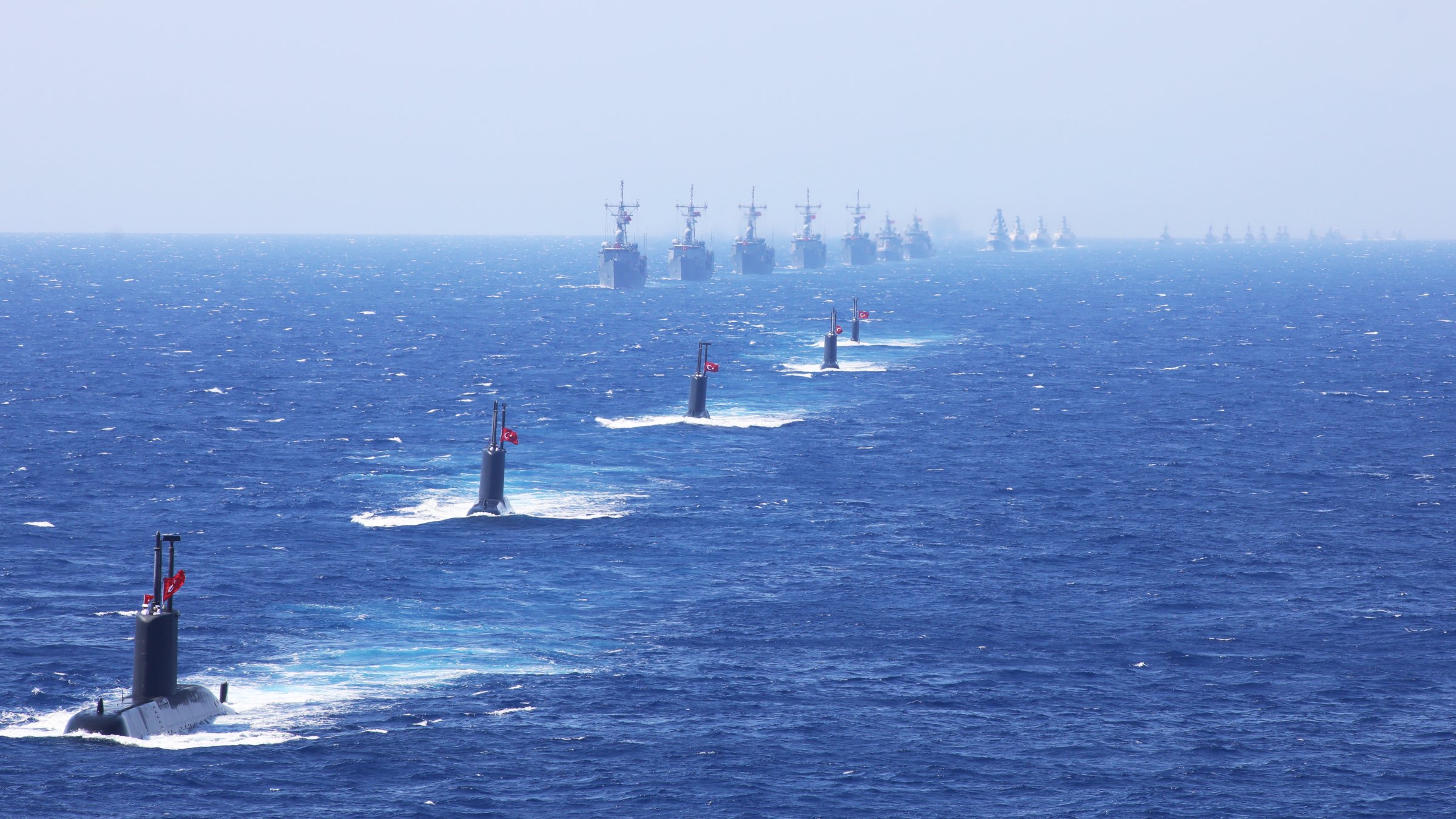
First ever "ATG" deployment was made with an Ada Class corvette and 1 Meko frigate along with army Cougars, navy AH-1s and Seahawks in 2024. Quadriga deployment this year was made with Istanbul and Oruçreis and the new TB3 in 2026.

What I'm trying to say is that it will be a work in progress for some years. MUGEM will not be a ready made product along with its CSG in day one. Tepe Class ships will have a long testing schedule, same as the MUGEM. Both are the most complex ships we will have ever used since the original Yavuz battlecruiser. Bringing full capabilities online will take years. We have missile development ongoing for Tepe, and fixed wing and rotary wing development for MUGEM still ongoing. A full CSG deployment with its embedded theater air defence capabilities will come no earlier than 2034-35.
 

dBSPL

Experienced member
Think Tank Analyst
DefenceHub Ambassador
Messages
2,871
Reactions
123 14,517
Nation of residence
Turkey
Nation of origin
Turkey
One timeline people rarely talk re the CSG is the organizational and operational aspect. Anadolu was temporarily given to navy for tests in late 2022. First tests were succesful so she was temporarily accepted into service in early 2023. Its first international exercise as i remember was Neptune Strike 24.1 in May 2024 along with elements from navy and land forces, which made up the "Anadolu Task Group" That's 14 months from official entering into inventory to first task group deployment. You'll remember that there was no TB3 in those first few international deployments and exercises. We first saw local exercises in 2025 and then the Quadriga deployment where the TB3 showed its mettle off the coast of Germany this year.

First ever "ATG" deployment was made with an Ada Class corvette and 1 Meko frigate along with army Cougars, navy AH-1s and Seahawks in 2024. Quadriga deployment this year was made with Istanbul and Oruçreis and the new TB3 in 2026.

What I'm trying to say is that it will be a work in progress for some years. MUGEM will not be a ready made product along with its CSG in day one. Tepe Class ships will have a long testing schedule, same as the MUGEM. Both are the most complex ships we will have ever used since the original Yavuz battlecruiser. Bringing full capabilities online will take years. We have missile development ongoing for Tepe, and fixed wing and rotary wing development for MUGEM still ongoing. A full CSG deployment with its embedded theater air defence capabilities will come no earlier than 2034-35.

Worth pushing this even further though. Anadolu is a rotary wing and drone LHD, which is already the simpler case. MUGEM brings fixed wing launch and recovery, arrestor gear on a maintenance cycle, and a much larger mixed air wing to integrate all at once. For a real point of comparison, USS Gerald R. Ford was delivered in 2017 and did not reach full operational capability until around 2025, call it eight years. If that is the yardstick, 2034-35 for MUGEM might end up being the optimistic case rather than the realistic one.

But, There is also a second layer to this beyond just the timeline math. The other pieces, Tepe-class, the naval Hurjet and etc, do not need to hit the water or clear prototype stage right at 2032, they need to reach matured status to integration with the carrier, and that gap between milestone and integration is exactly where the years disappear. Even the US, with decades of carrier aviation experience and every task group element already mature and in inventory, went through a long and messy workup for the first Ford-class hull, arresting gear reliability issues alone took years to resolve. Turkiye is not just building a new ship, it is standing up fixed wing naval aviation and an integrated carrier task force from zero at the same time. MUGEM does not need to match Ford's complexity to inherit first-of-class pain, it just needs to be the first time this country has ever tried to do this.

That is why I keep coming back to looking at MUGEM as the whole task force built around it, not just the ship. The sooner Hurjet gets wheels on the deck, the sooner the Tepe-class ships enter real service, the sooner the ATG actually becomes an operational reality that protects our interests and our deterrence on the open seas.
 
Top Bottom