
Latest Thread
- Kyrgyzstan rejects European proposal to accept migrants
- Russia Project 885M nuclear-powered submarine *Novosibirsk* strikes a target at a range of 1,200 km with a Kalibr missile.
- Space Brazil ties up with India's Skyroot Aerospace to develop Satellite Launch Vehicle
- Bangladesh Opinion Bangladesh’s intelligence challenge
- Open-source AI for exploiting cyber vulnerabilities
You are using an out of date browser. It may not display this or other websites correctly.
You should upgrade or use an alternative browser.
You should upgrade or use an alternative browser.
TR Air Defence Programs
- Thread starter Ghost soldier
- Start date


SİPER B1 also has GPS supported guidance, aside from a booster as a difference from HİSAR RF. GPS likely supports midcourse navigation much like AIM-120D


The most important reason for going HTK is reliably neutralizing the warhead. Just shooting down doesn't suffice when it comes to ballistic missiles, even TBMs, as demonstrated during Gulf War. You don't necessarily need a HTK kill vehicle if what you want is just shooting down ballistic missiles of longer range/higher speed.1) By reliably I mean with a kill probability over 50%.
Previously I thought without kill vehicle the chance against this kind of hypersonic balistic targets was much lower 20%/25%.
(Also, as USN planning to shoot down hypersonic targets with SM-6 which doesn't even have kill vehicle or end game maneuverability enhancement, it inspire confidence in my hypothesis)
2) And the reason they developed PAC-3 is to garunteee a hit with a kill probability of 95% with two interceptor assigned against each target.
Yes, I've got that part wrong. I've wrongly assumed that PAC-3 LE acts like KE rod warheads developed by Raytheon, but those are mere steel/titanium pellets. Though the reason they don't use LE for the sake of intercepting ballistic missiles is the same as the reason I've given above. Case in point, near-miss interception methods also works against ballistic missiles or hypersonic targets if it is meant for such threats. Korean M-SAM block II which has BMD capability for instance utilized KE rod in case there's a near miss.Reading from his other posts he is not the guy to miss such basic info.
I think his point stands. And afaik, small enhance lethality warhead is complementary and meant for airfracfts and cruise missiles. It is unlikely to have same effect on hypersonic targets, unless interceptor kineticcally slams into it. That's the whole point of PAC-3. Which would have totally obliterated the missile in the first place. Thus, it is very likely that it was a PAC-2 GEM.
TÜBİTAK SAGE General Manager Gürcan Okumuş: "SİPER Blok 2's range can be multiplied by 1.5 to 2 times with a booster"
So our dreams of a SİPER Block 2ER are likely to come true
So, this thing will probably be nearly 8 m in length. Mk41 Strike Length measures at nearly 8 m and SM-6 fills nearly the entire length.
Last edited:


TÜBİTAK SAGE General Manager Gürcan Okumuş: "SİPER Blok 2's range can be multiplied by 1.5 to 2 times with a booster"
So our dreams of a SİPER Block 2ER are likely to come true
So, this thing will probably be nearly 8 m in length. Mk41 Strike Length measures at nearly 8 m and SM-6 fills nearly the entire length.
View attachment 60727
I know that this is not the right thread but someone has to ask him about Gökhan and Akbaba. There is no news regarding the development of our ramjet missiles lately. And if I’m not mistaken, they were supposed to show Gökhan in late 2022 ?
Akbaba is a solid fuel ramjet missile and ROKETSAN is handling it.
Gökhan should start its tests this year if I remember correctly
Gökhan should start its tests this year if I remember correctly

SiperB1 with booster has 100km range so should we assume Siper B1's max range without booster is 35-40km?SİPER Blok 2's range can be multiplied by 1.5 to 2 times with a booster
Again Hisar RF happens to have 35-40 max range. How booster could multiply 2 times, fascinating.
We have had tests with Siper B1 that exceeded 120kmSiperB1 with booster has 100km range so should we assume Siper B1's max range without booster is 35-40km?
Again Hisar RF happens to have 35-40 max range. How booster could multiply 2 times, fascinating.
İ miscalculated. Türkçe düşündüm . 1,5 -2 katı gibi. Yüzde 50, yüzde 100 artış oluyor demekki.We have had tests with Siper B1 that exceeded 120km
So without booster siperB0 and Hisar RF's max range might be 60-70km.

Different altitudes for each of the missile's roles, thus multiplier is not the same. B2 reaches an higher altitude, 150+ km is so far is the alleged effective range. But anyone with common engineering sense may figure out that fella will go further.İ miscalculated. Türkçe düşündüm . 1,5 -2 katı gibi. Yüzde 50, yüzde 100 artış oluyor demekki.
So without booster siperB0 and Hisar RF's max range might be 60-70km.
So 1.5 to 2x may take us above 300km and a decent altitude. Altitude matters more in my opinion.
From ASELSAN's Siper brochureDifferent altitudes for each of the missile's roles, thus multiplier is not the same. B2 reaches an higher altitude, 150+ km is so far is the alleged effective range. But anyone with common engineering sense may figure out that fella will go further.
So 1.5 to 2x may take us above 300km and a decent altitude. Altitude matters more in my opinion.
>30km system max interception altitude
>150km system max interception range
But I guess that these are (at least range figure) is the "effective" one, similar to Hisar brochure's where effective range is listed as "max interception range"
And going higher means we might start seeing thruster based controls for future SİPER missiles. Anti Ballistic capability focused missiles have it because of air getting thinner and fins losing their ability to manuever the missile.

And going higher means we might start seeing thruster based controls for future SİPER missiles. Anti Ballistic capability focused missiles have it because of air getting thinner and fins losing their ability to manuever the missile.
Reminder; it was stated in the report published by Aselsan years ago that They started working on 5-Axis DACS system with their own resources. A side note: THAAD missiles have 4 axis DACS.

Mass production deliveries of the HİSAR-O+ Medium Altitude Air Defense Missile System, the prototypes of which were previously delivered to the Turkish Armed Forces, will be realized as of 2024.
HİSAR-O+ which developed with national resources , has IIR and RF guided missile options. The system has a range of 25 to 35 kilometers and altitude envelopes of 15-20 kilometers.

BalkanTurk90
Contributor

What mean by 'realization' in 2024?
Mass production deliveries of the HİSAR-O+ Medium Altitude Air Defense Missile System, the prototypes of which were previously delivered to the Turkish Armed Forces, will be realized as of 2024.
HİSAR-O+ which developed with national resources , has IIR and RF guided missile options. The system has a range of 25 to 35 kilometers and altitude envelopes of 15-20 kilometers.
it will finish the productiom?
Hisar O has since 3 years that start mass production but i cant find how many systems have been produced.
Previous deliveries may be low rate production which "realized" for urgent need.What mean by 'realization' in 2024?
it will finish the productiom?
Hisar O has since 3 years that start mass production but i cant find how many systems have been produced.

Bad translation, what @Sanchez says is closer to what was meant in the post. Prototypes were delivered before, now mass produced Hisar-O will be delivered in 2024.What mean by 'realization' in 2024?

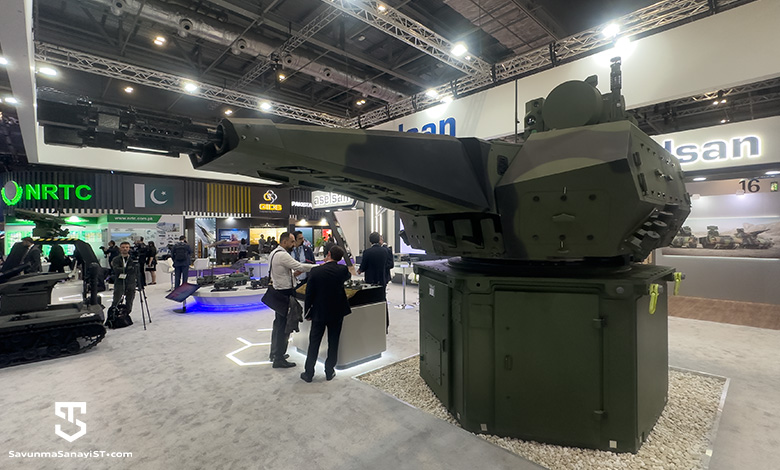
Aselsan successfully tested its C-RAM solution.
 www.savunmasanayist.com
ASELSAN’ın GÖKKUBBE’si C-RAM görevlerine hazır
ASELSAN tarafından geliştirilen GÖKKUBBE Hava Savunma Sistemi, C-RAM görevlerini yapmaya hazır. Sistemin ilk atışlı testleri başarıyla gerçekleştirildi.
www.savunmasanayist.com


