


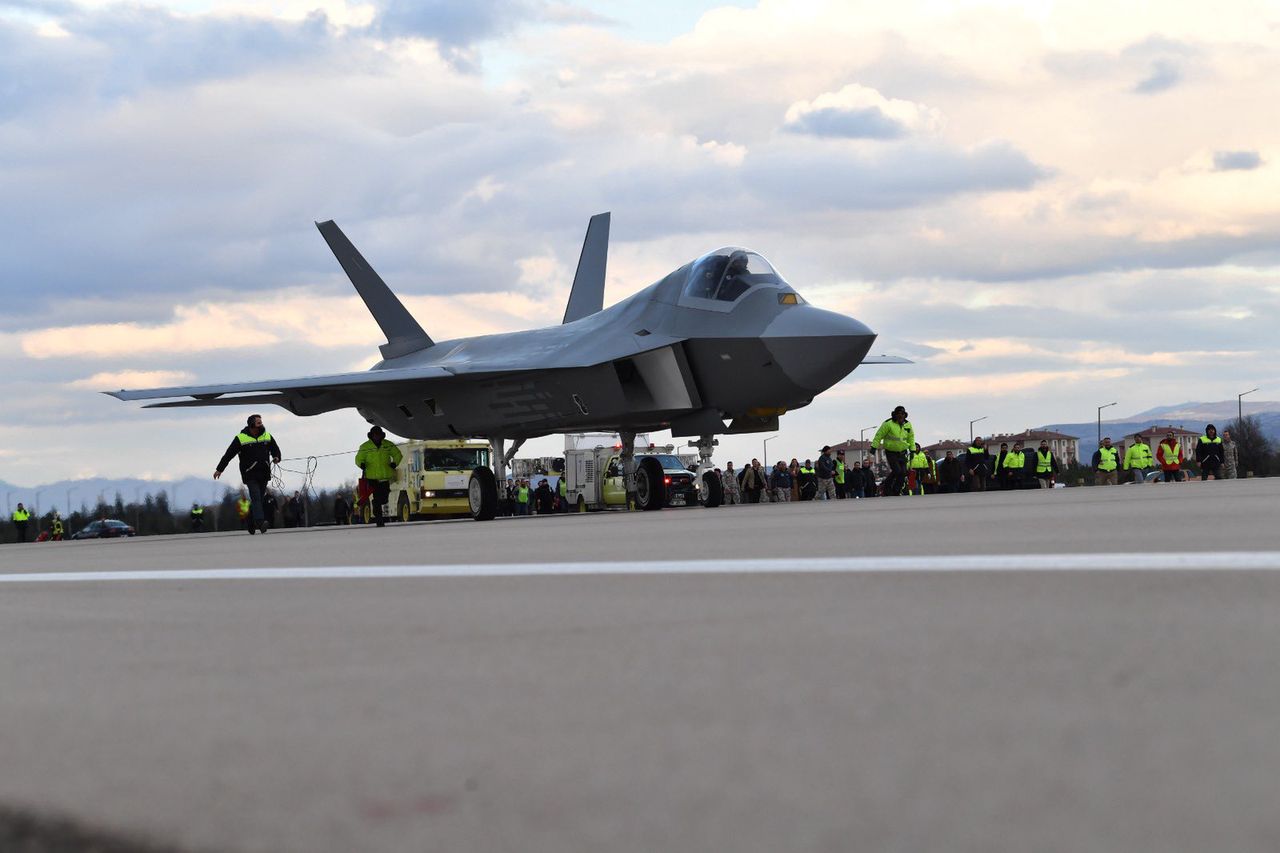
That was mentioned before by T. Kotil.the canopy-radome line looks smoothed out and the "pelican" look is gone.

Latest Thread
- Bangladesh Opinion Bangladesh’s intelligence challenge
- Iran’s Long Game in Türkiye: From Political Islam to the Post-Erdoğan Era
- Open-source AI for exploiting cyber vulnerabilities
- Engineering Atomic Machines: Matter Compiler
- Breaking News Turkish and Greek defence officials meet for "Confidence Building Measures"
You are using an out of date browser. It may not display this or other websites correctly.
You should upgrade or use an alternative browser.
You should upgrade or use an alternative browser.


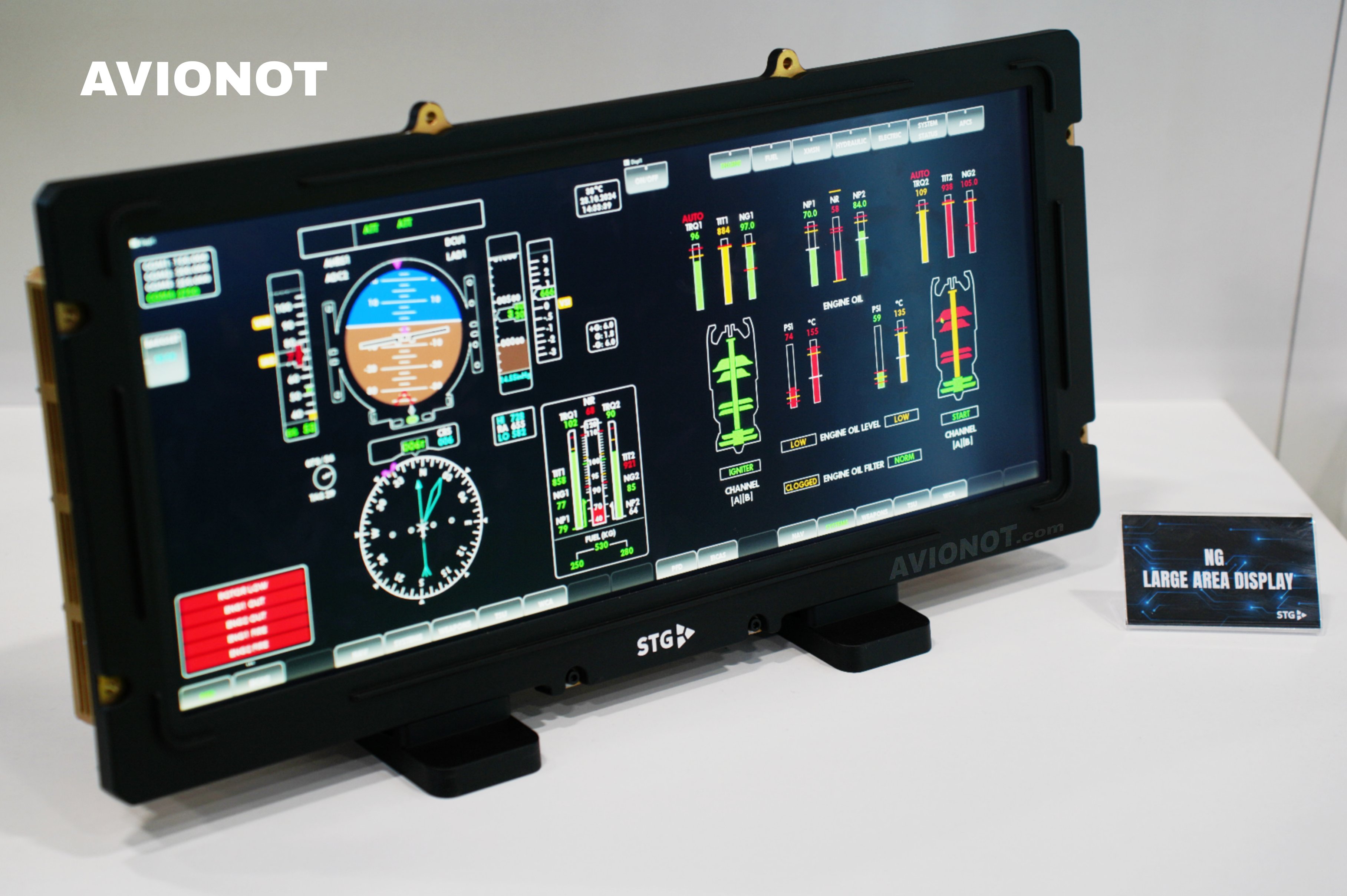
Touch screen developed by STG for Turkey's 5th generation fighter jet KAAN. Unlike the F-35 screen, the design does not reflect. The current design, which was tested on KAAN's first prototype and received feedback, was exhibited at SAHA EXPO. - Avionout

T
TR_123456
Guest
It has to.
Should KAAN be able to do that? 'Cause main air bases are vulnerable. Even with AMD bubble.

KAAN was designed to push the limits in terms of thrust-to-weight (T/W) ratio performance. If you recall, during its first flight, it achieved a very clean takeoff without using afterburners, even with F110 engines that produce about nearly 35% less dry thrust (expected/calculated) than the final engines. So, except for being “proven,” the answer to your question is yes.
Edit: In terms of landing, I think the huge flight control surfaces would create enough friction, at worst the current drag-chute would be an option for short-distance landings.
Edit: In terms of landing, I think the huge flight control surfaces would create enough friction, at worst the current drag-chute would be an option for short-distance landings.
Last edited:
Frankly speaking if you find yourself using highways for landing and take off it means that things are not going well for you. As we all know For Sweeden and Finland it was a contingency plan in case a war with Russia during Cold War in a scenario where they may have limited ability to use their airfields or the orgin of V/STOL concept which was succesfully adapted for use from AC or even the desperate aircraft designs of NAZİ Germany are the reflections of the same idea.... So should KAAN land on Highways? would be good I guess
As a conclusion if you find yourself using highways for landing and take off it means that things are not going well for you... you can not win a war by using hayways
As a conclusion if you find yourself using highways for landing and take off it means that things are not going well for you... you can not win a war by using hayways
Last edited:

Frankly speaking if you find yourself using highways for landing and take off it means that things are not going well for you. As we all know For Sweeden and Finland it was a contingency plan in case a war with Russia during Cold War in a scenario where they may have limited ability to use their airfields or the orgin of V/STOL concept which was succesfully adapted for use from AC or even the desperate aircraft designs of NAZİ Germany are the reflections of the same idea.... So should KAAN land on Highways?
As a conclusion if you find yourself using highways for landing and take off it means that things are not going well for you... you can not win a war by using hayways
No. Operating from highways is part of USAF's new Agile combat employment CONOP.
No. the very same reflection of the very same idea if you look a bit carefullyNo. Operating from highways is part of USAF's new Agile combat employment CONOP.
No. the very same reflection of the very same idea if you look a bit carefully
It is more than that. I read their dcotrinal publication. Did you?
Operating from highways does not mean you are already at significant disadvantage. USAF is the most capable in the world by a wide margin. Still, ACE and operating from highways as part of it is their new CONOP from the get-go. Not because they are tactically or operationally desperate like Nazi Germany, or outgunned like Nordic countries.
It is more than that. I read their dcotrinal publication. Did you?
Operating from highways does not mean you are already at significant disadvantage. USAF is the most capable in the world by a wide margin. Still, ACE and operating from highways as part of it is their new CONOP from the get-go. Not because they are tactically or operationally desperate like Nazi Germany, or outgunned like Nordic countries.
Good for you! So you read the dcotrinal publication and guess we have to assume that you understand it... right??
Lets read a small section of it together but this time lets put a mutual effort to understand it.
''As NATO peer and near-peer adversaries have continued to advance their intelligence-gathering, targeting, and long-range strike capabilities. Consequently, airbases, which have typically been geographically separated from conflict areas and represented relative safe havens, are increasingly vulnerable''
Doesn't this sound like a disturbance in their ontological securtiy?
I dont generally write aggressive comments but I dont like the way you replied....''I read their dcotrinal publication. Did you?'' this is not an argument and not a nice way to start
Last edited:
Good for you! So you read the dcotrinal publication and guess we have to assume that you understand it... right??
Lets read a small section of it together but this time lets put a mutual effort to understand it.
''As NATO peer and near-peer adversaries have continued to advance their intelligence-gathering, targeting, and long-range strike capabilities. Consequently, airbases, which have typically been geographically separated from conflict areas and represented relative safe havens, are increasingly vulnerable''
Doesn't this sound like a disturbance in their ontological securtiy?
So? I don't remember denying any overlaps or similarities bwtween two concepts or underpinning operational logic.
You said something very specific though. ACE is "the very same reflection of the very same idea if you look a bit carefully".
I disagreed and said, it is more than that.
Swedes didn't had any robust IAMD (specially BMD) like US military so they were disproportionately reliant on distributed operations from remote airfields and highways. USAF ACE CONOP very much include all types of active defenses of permanent bases and relies on it. While being contested, they expect to continuesly operate from there. However, it also conclude, IAMD, hardening and other measures are not fully sufficient. So, it reduces its sole reliance on permanent bases and distribute a good portion of its operations to small airfields and highways from the get-go.
Also, proactive intelligence plays an important role in force protection and risk management aspects of ACE. The quality and the quantity of which Swedes never had.
When, I am talking about KAAN landing on highways I am not merely copy pasting the Swedish concept. It's more similar to ACE. Where TurAF or any other friendly nation that operates KAAN has IAMD (including BMD) to protect permanent airbases and and contiue to fight for it and operate from there. At the same time distributing a portion of its operations to remote airfields and even highways.
I dont generally write aggressive comments but I dont like the way you replied....''I read their dcotrinal publication. Did you?'' this is not an argument and not a nice way to start
I wasn't trying to insult your intelligence. It was a simple question. And frankly, now it seems more relevant given you quoted something that isn't exactly from USAF ACE doctrine.

It is possible for heavy aircrafts with a wing area of less than 13-14 meters to land on roads in many region of Turkiye, but especially in the inner western Anatolia. I don't want to give details here, but this is something that is already taken into consideration in the projects of the Transportation, from leveling and infrastructure to expropriation works if necessary. Not for every road , but for as many as necessary. In addition, the standard width of the newly constructed highway tunnels is +21 meters and the standard height is approximately 9 meters, all of these tunnels were built using the NATM method or with TBM and in accordance with the technical regulations that can remain active in earthquakes of at least 7.25 moment without any damage. There are similar roads on the other side of the border in Bulgaria, even if they are dilapidated from lack of maintenance. When I passed with car about 10 years ago, it was in incredibly bad shape, I don't know its current condition. There are similar roads in Greece too. I think almost all of the NATO countries in this region have asphalt roads, either left over from the Cold War era or still well maintained, wide and level enough for jets to land on.
The situation in Sweden is different, it's not just about jets landing on paved roads. It's about a fully distributed logistics system approach, which includes hiding the combat aircraft of the air force in the forests and performing ground maintenance activities there, if necessary. The reasons are obvious: the Soviet strategic bombing capability. Very for this reason, both generations of fighter jets developed by the Swedes have been fighter jets with a minimal logistics footprint. The F-35 may be able to land on the edge of the forests, yes, but can you provide ground maintenance and logistics with units carried on trailers behind the pickups? It is debatable how suitable the aircraft's information management system is for this approach, let alone the logistics. Anyway, I will not get into this ball too much since it has too many fans.
Anyway, in conclusion, I don't think that F-16 will be the last single-engine fighter in the history of Turkish Air Force. KAAN start fill from above as direct F-22 competitor, and unmanned jets like Anka-3 and KE will start from below; solution range of Turkish aviation industry will be shaped to meet all needs in time. At the same time, I think such discussions also indicate the point at which the Turkish aviation industry has reached. Still, I would rather discuss whether KE can hide in the forests before KAAN
The situation in Sweden is different, it's not just about jets landing on paved roads. It's about a fully distributed logistics system approach, which includes hiding the combat aircraft of the air force in the forests and performing ground maintenance activities there, if necessary. The reasons are obvious: the Soviet strategic bombing capability. Very for this reason, both generations of fighter jets developed by the Swedes have been fighter jets with a minimal logistics footprint. The F-35 may be able to land on the edge of the forests, yes, but can you provide ground maintenance and logistics with units carried on trailers behind the pickups? It is debatable how suitable the aircraft's information management system is for this approach, let alone the logistics. Anyway, I will not get into this ball too much since it has too many fans.
Anyway, in conclusion, I don't think that F-16 will be the last single-engine fighter in the history of Turkish Air Force. KAAN start fill from above as direct F-22 competitor, and unmanned jets like Anka-3 and KE will start from below; solution range of Turkish aviation industry will be shaped to meet all needs in time. At the same time, I think such discussions also indicate the point at which the Turkish aviation industry has reached. Still, I would rather discuss whether KE can hide in the forests before KAAN
Last edited:

Thank you for posting. STG has done a fantastic job with it. Mind the fingers, the screen is usually quite hotTouch screen developed by STG for Turkey's 5th generation fighter jet KAAN. Unlike the F-35 screen, the design does not reflect. The current design, which was tested on KAAN's first prototype and received feedback, was exhibited at SAHA EXPO. - Avionout
TAI is currently using the internally developed LAD on Hurjet now, but STG also plans to integrate their platform on the Hurjet and that deal is progressing nicely.
Their focal point is standardization. They aim to equip a wide range of platforms with the same large area display in the not too distant future.
1-ACE 2022 conicides with two major events... Russian Ukranian war and the first time NATO singled out that China is one of its strategic priorities for the next decade....So? I don't remember denying any overlaps or similarities bwtween two concepts or underpinning operational logic.
You said something very specific though. ACE is "the very same reflection of the very same idea if you look a bit carefully".
I disagreed and said, it is more than that.
Swedes didn't had any robust IAMD (specially BMD) like US military so they were disproportionately reliant on distributed operations from remote airfields and highways. USAF ACE CONOP very much include all types of active defenses of permanent bases and relies on it. While being contested, they expect to continuesly operate from there. However, it also conclude, IAMD, hardening and other measures are not fully sufficient. So, it reduces its sole reliance on permanent bases and distribute a good portion of its operations to small airfields and highways from the get-go.
Also, proactive intelligence plays an important role in force protection and risk management aspects of ACE. The quality and the quantity of which Swedes never had.
When, I am talking about KAAN landing on highways I am not merely copy pasting the Swedish concept. It's more similar to ACE. Where TurAF or any other friendly nation that operates KAAN has IAMD (including BMD) to protect permanent airbases and and contiue to fight for it and operate from there. At the same time distributing a portion of its operations to remote airfields and even highways.
I wasn't trying to insult your intelligence. It was a simple question. And frankly, now it seems more relevant given you quoted something that isn't exactly from USAF ACE doctrine.
2-The concept of Agile Combat Employment (ACE) may not be entirely new nor radical but the complexities of modern warfare necessitate a number of modifications resulting in an approach as a ‘proactive and reactive operational scheme of manoeuvre executed within threat timelines to increase survivability while generating combat power’; the core tenets of ACE have always been a requirement for both US and NATO forces
(Air Force Doctrine Note 1-21, Agile Combat Employment, United States Air Force, 2022, p. 1.)
3-In essence ACE is a REACTION to the fact of reduced time for adversaries to find and target air power while on the ground, the accuracy of the weapons used against these targets, and the real or perceived higher value of modern complex air power assets
Should Turkey implement its own ACE doctrine... First of all NATO is an integral part of ACE therefore Turkey ....
-Unfortunatly, our interoperability wth our friendly nations is nothing near to our interoperability with NATO memebers.
AND you know this is not only about KAAN ....operational challenges of the coordination of complex aircrafts with a long logistic tail Not only KAAN but you know we have PEACE EAGLEs, ASENAs, HAVASOJs, MPAs....F16s.... drones..... same operatipnal challanges for Main Operating Bases, Forward Operating Sites, Contingency Locations ..... Initial sites that has minimal external support, Temporary sites with small amount of external support or Semi-Permanent sites with consistent support.... and all of them will be in constat motion.....Multi-Capable Airmen – personnel who are trained to and able to execute tasks beyond their primary trained specialism or cross-functional teams.... traning .... development of new tactics, techniques, and procedures.... investment in infrastructure
so in EssEnce still yes this is not any diffrent than SWEDEN in COLD WAR to me
Last edited:

The heat signature of an engine plays a subordinate role in the air combat of the 21st century.I’m not a fan of Kaan rear design.
View attachment 71617
Engines that are wide apart are not as stealthy. Hiding the thermals will be difficult.
There may be advantages in close range dogfighting with TVC but that’s it.
When engines are closer together you have a more streamlined flow which increases fuel efficiency. It’s much easier to hide heat signature (stealth). And it could make it easier to fly if one engine goes out.
This is because aerial combat will take place beyond visual range, hence the development of stealth fighter aircraft by all major industrialized nations such as the USA, Russia, China and the EU.
Whoever spots the enemy on radar first and launches their BVR missiles has basically won.
If a stealth fighter is involved in a close dogfight, then the pilot has done something wrong.
This is also evident in the F-35's stealth, avionics, electronic warfare suite and AESA radar capabilities, which are superior even to those of the F-22 - the F-35 is a flying supercomputer.
The F-22 is a relic from the 20th century that assumed there would still be air combat like the Top Gun era with the first sophisticated stealth BVR capabilities.
It is still the best fighter in the world and in a 1 and 1 against the F-35, the F-35 would have no chance against the F-22 Raptor, but in a dogfight in Beyond Visaul Range, precisely because of the more advanced stealth technology, and the AESA radar and its electronic features of the F-35.
The F-22 would have great difficulty locating the aircraft to get close enough to take it out.
Last edited:
Dont worry, final version will get a F-22 -like TVC...I’m not a fan of Kaan rear design.
View attachment 71617
Engines that are wide apart are not as stealthy. Hiding the thermals will be difficult.
There may be advantages in close range dogfighting with TVC but that’s it.
When engines are closer together you have a more streamlined flow which increases fuel efficiency. It’s much easier to hide heat signature (stealth). And it could make it easier to fly if one engine goes out.
Inshallah.
The heat signature of an engine plays a subordinate role in the air combat of the 21st century.
This is because aerial combat will take place beyond visual range, hence the development of stealth fighter aircraft by all major industrialized nations such as the USA, Russia, China and the EU.
Whoever spots the enemy on radar first and launches their BVR missiles has basically won.
If a stealth fighter is involved in a close dogfight, then the pilot has done something wrong.
This is also evident in the F-35's stealth, avionics, electronic warfare suite and AESA radar capabilities, which are superior even to those of the F-22 - the F-35 is a flying supercomputer.
The F-22 is a relic from the 20th century that assumed there would still be air combat like the Top Gun era with the first sophisticated stealth BVR capabilities.
It is still the best fighter in the world and in a 1 and 1 against the F-35, the F-35 would have no chance against the F-22 Raptor, but in a dogfight in Beyond Visaul Range, precisely because of the more advanced stealth technology, and the AESA radar and its electronic features of the F-35.
The F-22 would have great difficulty locating the aircraft to get close enough to take it out.
If everyone has a stealth plane, wouldn't this increase the possibility of WVR?The heat signature of an engine plays a subordinate role in the air combat of the 21st century.
This is because aerial combat will take place beyond visual range, hence the development of stealth fighter aircraft by all major industrialized nations such as the USA, Russia, China and the EU.
Whoever spots the enemy on radar first and launches their BVR missiles has basically won.
If a stealth fighter is involved in a close dogfight, then the pilot has done something wrong.
This is also evident in the F-35's stealth, avionics, electronic warfare suite and AESA radar capabilities, which are superior even to those of the F-22 - the F-35 is a flying supercomputer.
The F-22 is a relic from the 20th century that assumed there would still be air combat like the Top Gun era with the first sophisticated stealth BVR capabilities.
It is still the best fighter in the world and in a 1 and 1 against the F-35, the F-35 would have no chance against the F-22 Raptor, but in a dogfight in Beyond Visaul Range, precisely because of the more advanced stealth technology, and the AESA radar and its electronic features of the F-35.
The F-22 would have great difficulty locating the aircraft to get close enough to take it out.
And wouldn't detecting the heat signature be even more important?
What your say fits the 4th generation air warfare
Makes no sense to detect the heat signature, you must first locate the aircraft and get close enough to fire missiles with an infrared seeker. Then you can also fire BVR missiles at the target from a safe distance and don't even have to get close, it's far less risky than active close combat.If everyone has a stealth plane, wouldn't this increase the possibility of WVR?
And wouldn't detecting the heat signature be even more important?
What your say fits the 4th generation air warfare
You have to think of these planes as assassins that kill the target quickly and inconspicuously and quickly move away from the danger zone. Under no circumstances will they get involved in a fight if it is not necessary.
Last edited:

Company like that must be well protected by Cybersecurity.RAM from a private company in Turkiye.


