

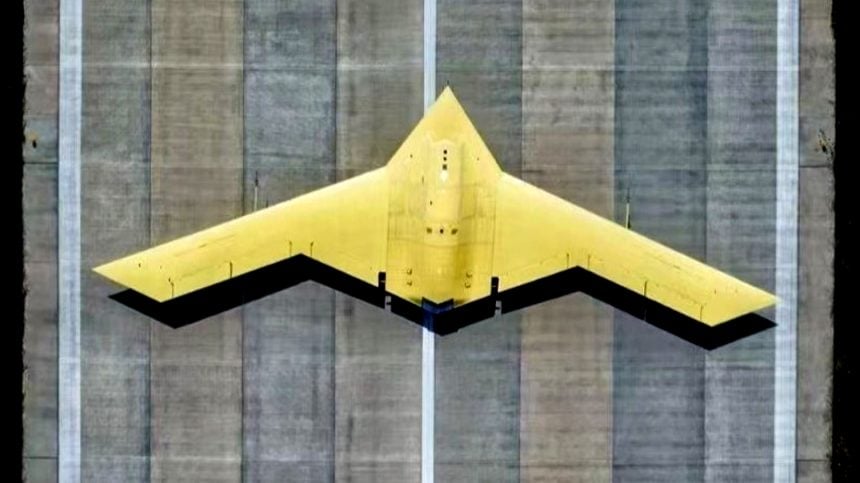
The Chinese CH-7 UCAV will have a longer range thanks to its wide wingspan, more fuel, and possibly a larger ammunition capacity in the mid-fuselage. This design seems like a logical design for stealth aircraft.I am familiar with all the points you made, and I read the bi-directional flying wing paper when it was released. However, I keep hearing that Anka 3 will go supersonic, and TUSAS is working on something. If you look at ANKA-3, it is not a conventional flying wing design. It is a delta wing flying wing hybrid. It looks like a triangle/big single piece of delta wing, with an aggressive sweep angle. An aggressive sweep angle is related to higher speeds. There are surely big questions to be answered, but i keep hearing this from multiple sources, both popular sources and sources inside the industry, that can't all be lying at the same time.
The rumored aircraft is supposed to have a dual engine setup, over 2x thrust and up to %30 increased MTOW. Supersonic cruise target is Mach 1.2-1.3.
Chinese CH-7
B-2 Spirit B-21 Raider

Anka 3

Latest Thread
- Russia ZAK-30 Tsitadel anti-aircraft artillery system: overview and operation
- Bangladesh Seoul welcomes Dhaka's interest in strengthening defence ties
- Bangladesh Modernise armed forces, replace outdated machinery: Parliamentary body
- Kyrgyzstan rejects European proposal to accept migrants
- Russia Project 885M nuclear-powered submarine *Novosibirsk* strikes a target at a range of 1,200 km with a Kalibr missile.
You are using an out of date browser. It may not display this or other websites correctly.
You should upgrade or use an alternative browser.
You should upgrade or use an alternative browser.

As the new year approaches, I felt like making a new style for the infographics too
I have observed the Turkish munition-dropping UAVs over the course of two years at exhibitions, and I can say that there is a good amount of those cloning the exact same layout from Ukraine War while some others are adding their own touches and DUMRUL is a good example.
Aside from helicopter handling, it is still light enough to be carried easily by mobile units, maybe even easier than multicopter UAVs as it is quite sleek when stowed.
In addition to mortar rounds, it can carry METE missiles for surgical hits at long range (that is by the standards of small armed UAVs), TİTRA stated that it has been integrated to DUMRUL.
Or if you want some more sustained close range support, you can slap a revolving grenade launcher under.
Then we have a really unconventional answer to jamming as navigation by laser marking a location and FPV control option for comfortable direction
Did not make an infograhpic for it yet but BOYGA-B with the option to carry TUNGA smart munition with TV/IR seeker and KARGU FPV options is another honorable mention in terms of building on the concept.


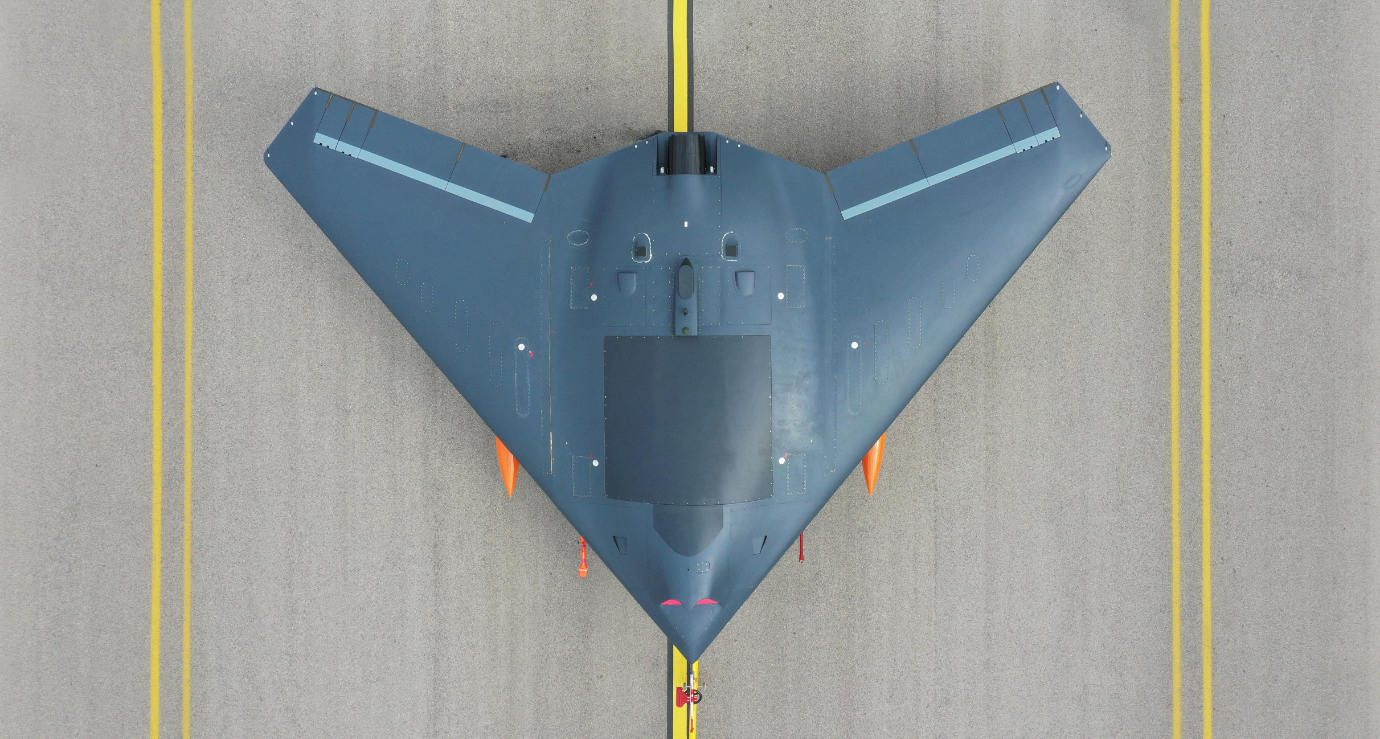
I can see where you are coming from. Anka -3 is not as wide as standard flying wing. It is more compact and a bit closer to a delta wing. But not quite. If you check the frontal exposed surface thicknesses of Anka-3 it is substantially thick. Even the end part of the wings are quite thick. That would cause so much drag related stress on the design that would give it problems if it tried to go.supersonic.I am familiar with all the points you made, and I read the bi-directional flying wing paper when it was released. However, I keep hearing that Anka 3 will go supersonic, and TUSAS is working on something. If you look at ANKA-3, it is not a conventional flying wing design. It is a delta wing flying wing hybrid. It looks like a triangle/big single piece of delta wing, with an aggressive sweep angle. An aggressive sweep angle is related to higher speeds. There are surely big questions to be answered, but i keep hearing this from multiple sources, both popular sources and sources inside the industry, that can't all be lying at the same time.
The rumored aircraft is supposed to have a dual engine setup, over 2x thrust and up to %30 increased MTOW. Supersonic cruise target is Mach 1.2-1.3.
Chinese CH-7
B-2 Spirit B-21 Raider
Anka 3
Anka3 pic B
Yet if you check out the Boeing’s NGAD supersonic design, the edges are tapered thin and especially towards the tail the front edges are thin and streamlined to allow supersonic flight.
NGAD Pic 4
(If you compare Anka3 pic B and NGAD pic 4 pictures, back end has similarities. But NGAD’s it‘s front is elongated and streamlined. Plus edges of extremities are well tapered.)
Now, if they pull the nose of Anka-3 forward and streamline it with thin edges like that, then it can be possible to create something out of Anka-3 that can fly supersonic.
But that will be Anka-4, not Anka-3 especially if they are going to add a second engine too.
We will see in due course, if that will happen.

Pokemonte13
Contributor


Actually, this makes a lot of senseWe know that ANKA-3 project started based on Boeing's UCAV Model 1303.
Now look what i have found.
Numerical study of geometric morphing wings of the 1303 UCAV

Why? What makes Ghost Bat more stealth?I have still problems with the design of Kizilelma. It doesn’t look “LO enough “ , less matured. Try to compare it with Ghost Bat.


As common knowledge canard may considered as an effecting factor in LO ... surface finishing is important as well (concerning surface finishing so far we have seen prototypes and ''production prototypes'' (KIZILELMA PT-series ) not wise to expect Boeing or TAI (once assigned to manufacture center fuselages of F 35 and now KAAN) manufacruring standards from Baykar overnight.I have still problems with the design of Kizilelma. It doesn’t look “LO enough “ , less matured. Try to compare it with Ghost Bat.
all aspect stealth and low RSC from all directions should be an expensive masterpiece... may not worth it for an unmanned platform.
Further, our requirements and our reality or the role we envisioned for KIZILELM may defintly be different from requirements which created Ghost Bat or other projects.
we can assume that path of lower RCS from certain direction(s) has been followed and/or prioritized for KIZILELMA
AND eventhough we have never heard a single word about it, Luneburg lenses on KIZILELMA is definitly a good sign

Last edited:

Current Kızılelme isn't the final form of Kızılelma.
First, Ghost Bat looks from one piece. Second, the Air intake and fuselage looks seamless. Third, all the visible screws and rivets on Kizilelma. Fourth, the Radome is more flush mounted and less straight like be Kizilelma. And some more points I could count if you want?..Why? What makes Ghost Bat more stealth?
I thought that’s the final design of mass production.Current Kızılelme isn't the final form of Kızılelma.
Nope. This is the final design for LRIP. Some amount of Kızılelma will be delivered next year. Subtle changes will continue, particularly those that affect stealth.I thought that’s the final design of mass production.
Landing gears doesn't even have coverings after they retract. So Have can this be final form?I thought that’s the final design of mass production.
Your first 2 points are about the paint, not the drone lol and 4th is just a bent nose, how does that effect its RCS?First, Ghost Bat looks from one piece. Second, the Air intake and fuselage looks seamless. Third, all the visible screws and rivets on Kizilelma. Fourth, the Radome is more flush mounted and less straight like be Kizilelma. And some more points I could count if you want?..
About a ton of munitions there. 4 Mk-82s and a Mam-T to top it off.
-MAM-T
-LAÇİN-82
- TEBER-82 Winged Guidance Kit
About a ton of munitions there. 4 Mk-82s and a Mam-T to top it off.
You think the reason why Ghost Bat loooks from one piece and without screws and rievets is just the paint?Your first 2 points are about the paint, not the drone lol and 4th is just a bent nose, how does that affect its RCS?
About the bent nose, does it effect the RCS?
Pokemonte13
Contributor
More than a ton like 1.150 kilogramsAbout a ton of munitions there. 4 Mk-82s and a Mam-T to top it off.

Landing gears doesn't even have coverings after they retract. So Have can this be final form?
They have now


