
Latest Thread
- Russia ZAK-30 Tsitadel anti-aircraft artillery system: overview and operation
- Bangladesh Seoul welcomes Dhaka's interest in strengthening defence ties
- Bangladesh Modernise armed forces, replace outdated machinery: Parliamentary body
- Piercing the illusion of the 'Indian Century', the Indian economy shows a fragile background
- Kyrgyzstan rejects European proposal to accept migrants
You are using an out of date browser. It may not display this or other websites correctly.
You should upgrade or use an alternative browser.
You should upgrade or use an alternative browser.




TCG Sakarya subs modernization completed


Attack submarines are the most vital weapons of every navy.
The modern attack submarine is, in fact, a wolf that hunts alone. Apart from protecting surface ships and convoys, they are the nightmare of every surface platform with their primary mission of stealth attack; and of coastal and deep land targets with their long-range cruise missiles.
We can examine modern attack submarines in 3 different categories in terms of their propulsion systems:
1. Diesel engine/diesel generator: These move with their diesel engines on the surface (and at depths close to the surface - snorkel depth). They also charge their batteries with a diesel generator. They are driven silently while submerged with their lead-acid batteries. In the newest models of these, their lead-acid batteries are evolving into much more efficient Li-Ion batteries.
The speed of submarines with lead-acid batteries does not exceed 20 knots while submerged. They also quickly consume the battery at this speed. Their duration at depth is measured in hours; at economical speeds, a few days. Li-Ion battery submarines can stay at depths for 1 week-10 days and can move at high speed in an emergency. Japanese Taigei submarines are a good example of this.
2. Air-independent propulsion submarines. (AIP ): The best example of these is the Reis Class submarines. These submarines produce electricity while submerged with hydrogen fuel cell technology and Proton Exchange Membrane, keep the lead-acid batteries constantly charged and can stay underwater for 2-3 weeks without surfacing. However, they make 4 knots economically and 8 knots at high speed. If they move at 20 knots, there is no difference from the diesel submarine above as they would deplete their batteries. When the AIP and PEM systems are not working, they are standard diesel-powered submarines.
3. Nuclear-powered submarines: These are submarines that are propelled by a small nuclear reactor and can move silently with the electricity provided by this reactor; in addition, they can stay underwater for months by obtaining oxygen from the water with this electricity. However, they have dive times that do not exceed 90 days in terms of the food they can carry. Also, since the psychological health of the crew is taken into consideration while submerged, very long dives are not made. These submarines can reach speeds of 30+ knots underwater. Since the reactor can theoretically operate for decades (20-30 years), it is possible for these submarines to operate for a very long time without stopping at a port.
Japanese Soryu class submarines were AIP submarines. However, they produced the last 2 submarines as Li-Ion class. And they are producing the last Taigei class with Li-Ion propulsion too.
Japanese submarine captains complained about the slow speeds of AIP submarines, emphasizing the importance of getting away from the area they are in quickly, after using torpedoes, and in an emergency, and as a result, the Japanese Navy turned to the Li-Ion system in its new submarine concept.
Inspired by the Japanese, we are also studying developing a Li-Ion propulsion system. Although AIP propulsion is planned for Milden, the complexity and external dependency of this system may push us towards Li-Ion powered submarines.
Although nuclear powered submarines seem to be the Nirvana of this business and these submarines can go much faster and dive deeper, the fact that the reactor is constantly running means that many pumps and mechanisms produce noise. In this respect, modern Li-Ion and AIP powered submarines are quieter. These features have been highlighted many times in naval operations.
The modern attack submarine is, in fact, a wolf that hunts alone. Apart from protecting surface ships and convoys, they are the nightmare of every surface platform with their primary mission of stealth attack; and of coastal and deep land targets with their long-range cruise missiles.
We can examine modern attack submarines in 3 different categories in terms of their propulsion systems:
1. Diesel engine/diesel generator: These move with their diesel engines on the surface (and at depths close to the surface - snorkel depth). They also charge their batteries with a diesel generator. They are driven silently while submerged with their lead-acid batteries. In the newest models of these, their lead-acid batteries are evolving into much more efficient Li-Ion batteries.
The speed of submarines with lead-acid batteries does not exceed 20 knots while submerged. They also quickly consume the battery at this speed. Their duration at depth is measured in hours; at economical speeds, a few days. Li-Ion battery submarines can stay at depths for 1 week-10 days and can move at high speed in an emergency. Japanese Taigei submarines are a good example of this.
2. Air-independent propulsion submarines. (AIP ): The best example of these is the Reis Class submarines. These submarines produce electricity while submerged with hydrogen fuel cell technology and Proton Exchange Membrane, keep the lead-acid batteries constantly charged and can stay underwater for 2-3 weeks without surfacing. However, they make 4 knots economically and 8 knots at high speed. If they move at 20 knots, there is no difference from the diesel submarine above as they would deplete their batteries. When the AIP and PEM systems are not working, they are standard diesel-powered submarines.
3. Nuclear-powered submarines: These are submarines that are propelled by a small nuclear reactor and can move silently with the electricity provided by this reactor; in addition, they can stay underwater for months by obtaining oxygen from the water with this electricity. However, they have dive times that do not exceed 90 days in terms of the food they can carry. Also, since the psychological health of the crew is taken into consideration while submerged, very long dives are not made. These submarines can reach speeds of 30+ knots underwater. Since the reactor can theoretically operate for decades (20-30 years), it is possible for these submarines to operate for a very long time without stopping at a port.
Japanese Soryu class submarines were AIP submarines. However, they produced the last 2 submarines as Li-Ion class. And they are producing the last Taigei class with Li-Ion propulsion too.
Japanese submarine captains complained about the slow speeds of AIP submarines, emphasizing the importance of getting away from the area they are in quickly, after using torpedoes, and in an emergency, and as a result, the Japanese Navy turned to the Li-Ion system in its new submarine concept.
Inspired by the Japanese, we are also studying developing a Li-Ion propulsion system. Although AIP propulsion is planned for Milden, the complexity and external dependency of this system may push us towards Li-Ion powered submarines.
Although nuclear powered submarines seem to be the Nirvana of this business and these submarines can go much faster and dive deeper, the fact that the reactor is constantly running means that many pumps and mechanisms produce noise. In this respect, modern Li-Ion and AIP powered submarines are quieter. These features have been highlighted many times in naval operations.

Another excellent post. Thanks Yasar_TR üstad.
***
IMHO, my shortest categorization mentality is that submarines are an offensive element, while surface platforms are basically for area dominance.
Submarines can paralyze a navy's logistical links or maritime trade, and in some specific cases even its surface strike force. This is a very strategic force that can add another layer up front to the AD area established by surface and other support means and keep the enemy's power projection away from territorial waters. Fortunately, our naval tradition has given due importance to the submarine fleet for decades. If we gain access to nuclear-propulsion in the coming decades, we will be able to initiate this deterrent from their seas wherever the enemy is, with submarines that are air-independent and capable of high-speed submerged cruise.
***
IMHO, my shortest categorization mentality is that submarines are an offensive element, while surface platforms are basically for area dominance.
Submarines can paralyze a navy's logistical links or maritime trade, and in some specific cases even its surface strike force. This is a very strategic force that can add another layer up front to the AD area established by surface and other support means and keep the enemy's power projection away from territorial waters. Fortunately, our naval tradition has given due importance to the submarine fleet for decades. If we gain access to nuclear-propulsion in the coming decades, we will be able to initiate this deterrent from their seas wherever the enemy is, with submarines that are air-independent and capable of high-speed submerged cruise.

What about Li-ion batteries with fuel cell hydrogen combination?Attack submarines are the most vital weapons of every navy.
The modern attack submarine is, in fact, a wolf that hunts alone. Apart from protecting surface ships and convoys, they are the nightmare of every surface platform with their primary mission of stealth attack; and of coastal and deep land targets with their long-range cruise missiles.
We can examine modern attack submarines in 3 different categories in terms of their propulsion systems:
1. Diesel engine/diesel generator: These move with their diesel engines on the surface (and at depths close to the surface - snorkel depth). They also charge their batteries with a diesel generator. They are driven silently while submerged with their lead-acid batteries. In the newest models of these, their lead-acid batteries are evolving into much more efficient Li-Ion batteries.
The speed of submarines with lead-acid batteries does not exceed 20 knots while submerged. They also quickly consume the battery at this speed. Their duration at depth is measured in hours; at economical speeds, a few days. Li-Ion battery submarines can stay at depths for 1 week-10 days and can move at high speed in an emergency. Japanese Taigei submarines are a good example of this.
2. Air-independent propulsion submarines. (AIP ): The best example of these is the Reis Class submarines. These submarines produce electricity while submerged with hydrogen fuel cell technology and Proton Exchange Membrane, keep the lead-acid batteries constantly charged and can stay underwater for 2-3 weeks without surfacing. However, they make 4 knots economically and 8 knots at high speed. If they move at 20 knots, there is no difference from the diesel submarine above as they would deplete their batteries. When the AIP and PEM systems are not working, they are standard diesel-powered submarines.
3. Nuclear-powered submarines: These are submarines that are propelled by a small nuclear reactor and can move silently with the electricity provided by this reactor; in addition, they can stay underwater for months by obtaining oxygen from the water with this electricity. However, they have dive times that do not exceed 90 days in terms of the food they can carry. Also, since the psychological health of the crew is taken into consideration while submerged, very long dives are not made. These submarines can reach speeds of 30+ knots underwater. Since the reactor can theoretically operate for decades (20-30 years), it is possible for these submarines to operate for a very long time without stopping at a port.
Japanese Soryu class submarines were AIP submarines. However, they produced the last 2 submarines as Li-Ion class. And they are producing the last Taigei class with Li-Ion propulsion too.
Japanese submarine captains complained about the slow speeds of AIP submarines, emphasizing the importance of getting away from the area they are in quickly, after using torpedoes, and in an emergency, and as a result, the Japanese Navy turned to the Li-Ion system in its new submarine concept.
Inspired by the Japanese, we are also studying developing a Li-Ion propulsion system. Although AIP propulsion is planned for Milden, the complexity and external dependency of this system may push us towards Li-Ion powered submarines.
Although nuclear powered submarines seem to be the Nirvana of this business and these submarines can go much faster and dive deeper, the fact that the reactor is constantly running means that many pumps and mechanisms produce noise. In this respect, modern Li-Ion and AIP powered submarines are quieter. These features have been highlighted many times in naval operations.
 Underwater when you need speed use Li-ion batteries, when you just need cruising or approaching the territory of missionswitch to fuel-cell hydrogen.
They could add our hydrogen Milden some Li-ion batteries which would give flexibility of speed in critical conditions.
Even i found the place for additional Li-ion batteries. Wait.
Make the Li-ion battery replacable and use when the mission requires additional speed. You don't always need underwater delivery vessel.
Jesus Christ I am genius

Last edited:


I don't think you're taking the immense underwater pressure into consideration.What about Li-ion batteries with fuel cell hydrogen combination?
They could add our hydrogen Milden some Li-ion batteries which would give flexibility of speed in critical conditions.
Even i found the place for additional Li-ion batteries. Wait.
View attachment 73348
Make the Li-ion battery replacable and use when the mission requires additional speed. You don't always need underwater delivery vessel.
Jesus Christ I am genius
I think the problem neither is pressure nor vulnerable structure of batteries.I don't think you're taking the immense underwater pressure into consideration.
If the pressure were problem they would not put there mini sub.
The problem would be lack of sterling engines. Li-ion batteries would need generators when the sub is underwater. Look at Japanese soryu class , they have 4 sterling engines ( which are noisy!)
Edit: sorry for false information. Last gen Japanese sub doesn't require sterling generator!!!
So do we have still chance ? No, because additional battery package would weight minimum 50-100 tons. This would disturb the balance of submarine.

JS Tōryū - Wikipedia
Last edited:

Past 10 years in my job, never seen one silent diesel engine. They run pretty noisy on submarines too.They are driven silently
 Yet we have got a lovely bulkhead (well - isolated) that keeps it away from operations center.
Despite of having maximimum speeds over 20 knots, lead-acid batteries generate toxic gases when heavily loaded and tends to warm up beyond how it can be cooled. I am sure it can run more than several hours at maximum speed (theoretically considering the battery capacity only) but the battery temperature and aforementioned gases wouldn't let it happen.
Been lucky to dive with a submarine before and after MLU, and lastly with one Reis during trials. And i came to this conclusion; the real mastery of diesel-electric submarines come with the PMM (Synchronous motor) and double-platform isolators. AIP, Li-Ion, Lead-acid introduces a little 'bump' there. AIP indeed gives a one-time shot skipping few snorkels and gives an upper hand but it is not enough alone.
While with Preveze and Gür Class Modernizations we are taking these submarines to what Reis Class have, in terms of electronics, sensors, integration of weapon - network systems, the difference of motors and double platform are absolute.
Possibly these two techs will be the bottleneck at Milden programme, i have no doubts on that AIP and Li-Ion can be achieved sooner than PMM double-isolating platforms.
3rd MKE 76mm gun was delivered to Istanbul Shipyard Command to be installed onto İstif Class TCG İzmir. First two guns were installed on the first two Hisar Class OPVs.
How about the one they fitted on to TCG Gaziantep?3rd MKE 76mm gun was delivered to Istanbul Shipyard Command to be installed onto İstif Class TCG İzmir. First two guns were installed on the first two Hisar Class OPVs.
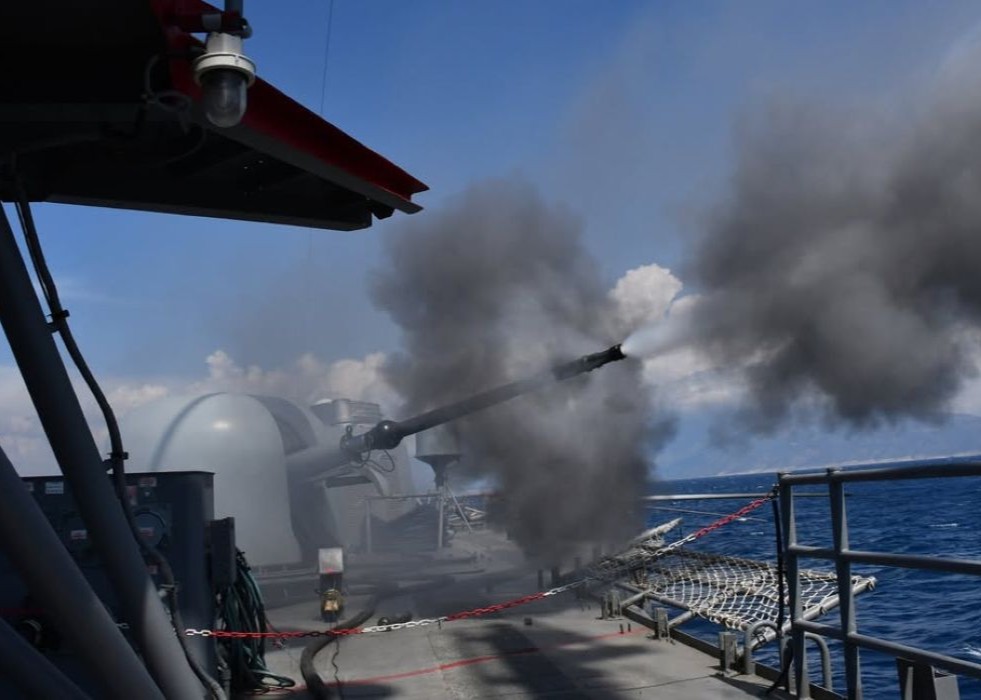
MKE’s 76 mm Barrel Enters Inventory on TCG Gaziantep | TURDEF
The Turkish MoD announced on social media that the foreign-made 76 mm main naval gun barrel on TCG Gaziantep has been replaced with MKE’s indigenous barrel.
 turdef.com
And the one one TCG Beykoz?
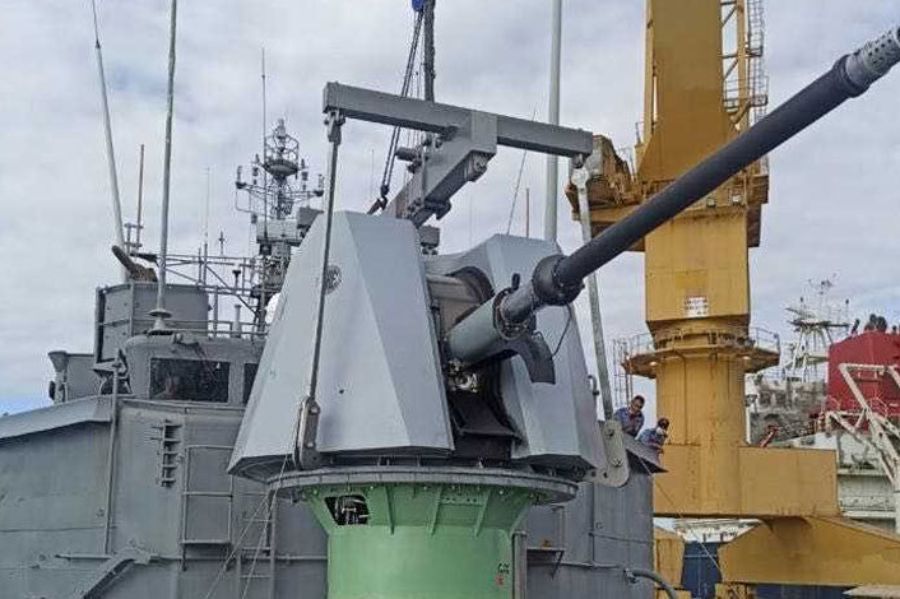
MKE’s 76/62 mm Naval Gun is Installed on TCG Beykoz Corvette | TURDEF
MKE Inc design and development of the 76/62 mm naval gun is installed on the Burak Class TCG Beykoz (F503) Corvette to conduct test firings.
turdef.com
mohammadtd
Active member


Would you please shed light on Turkey's future API program? I don't see any improvement on that. Thank you in advance.Past 10 years in my job, never seen one silent diesel engine. They run pretty noisy on submarines too.
Despite of having maximimum speeds over 20 knots, lead-acid batteries generate toxic gases when heavily loaded and tends to warm up beyond how it can be cooled. I am sure it can run more than several hours at maximum speed (theoretically considering the battery capacity only) but the battery temperature and aforementioned gases wouldn't let it happen.
Been lucky to dive with a submarine before and after MLU, and lastly with one Reis during trials. And i came to this conclusion; the real mastery of diesel-electric submarines come with the PMM (Synchronous motor) and double-platform isolators. AIP, Li-Ion, Lead-acid introduces a little 'bump' there. AIP indeed gives a one-time shot skipping few snorkels and gives an upper hand but it is not enough alone.
While with Preveze and Gür Class Modernizations we are taking these submarines to what Reis Class have, in terms of electronics, sensors, integration of weapon - network systems, the difference of motors and double platform are absolute.
Possibly these two techs will be the bottleneck at Milden programme, i have no doubts on that AIP and Li-Ion can be achieved sooner than PMM double-isolating platforms.


Perhaps, This piece by @Yasar_TR might give you a new insight on future of Turkish sub propulsion program(s)Would you please shed light on Turkey's future API program? I don't see any improvement on that. Thank you in advance.
Japanese Soryu class submarines were AIP submarines. However, they produced the last 2 submarines as Li-Ion class. And they are producing the last Taigei class with Li-Ion propulsion too.
Japanese submarine captains complained about the slow speeds of AIP submarines, emphasizing the importance of getting away from the area they are in quickly, after using torpedoes, and in an emergency, and as a result, the Japanese Navy turned to the Li-Ion system in its new submarine concept.
Inspired by the Japanese, we are also studying developing a Li-Ion propulsion system. Although AIP propulsion is planned for Milden, the complexity and external dependency of this system may push us towards Li-Ion powered submarines.
Gaziantep just had a barrel replacement. Beykoz had a test article, call it a prototype. And I believe she is now retired. I think they consider these 3 as "serial" production units. Quote is directly from MSB's weekly briefing, not Akbaba's own words.How about the one they fitted on to TCG Gaziantep?
MKE’s 76 mm Barrel Enters Inventory on TCG Gaziantep | TURDEF
The Turkish MoD announced on social media that the foreign-made 76 mm main naval gun barrel on TCG Gaziantep has been replaced with MKE’s indigenous barrel.
And the one one TCG Beykoz?
MKE’s 76/62 mm Naval Gun is Installed on TCG Beykoz Corvette | TURDEF
MKE Inc design and development of the 76/62 mm naval gun is installed on the Burak Class TCG Beykoz (F503) Corvette to conduct test firings.

How about the one they fitted on to TCG Gaziantep?
MKE’s 76 mm Barrel Enters Inventory on TCG Gaziantep | TURDEF
The Turkish MoD announced on social media that the foreign-made 76 mm main naval gun barrel on TCG Gaziantep has been replaced with MKE’s indigenous barrel.
And the one one TCG Beykoz?
MKE’s 76/62 mm Naval Gun is Installed on TCG Beykoz Corvette | TURDEF
MKE Inc design and development of the 76/62 mm naval gun is installed on the Burak Class TCG Beykoz (F503) Corvette to conduct test firings.
Only the barrell replaced on the Gaziantep. I don't know what entails with the barrel replacement(I thought they just replaced the barrels but it might be more complicated than that) but considering the unique gun position on the Gabya's, I am not sure if full replacement of the gun is possible.

BalkanTurk90
Contributor

Didnt aslo 1st istanbul have national MKE 76mm gun?3rd MKE 76mm gun was delivered to Istanbul Shipyard Command to be installed onto İstif Class TCG İzmir. First two guns were installed on the first two Hisar Class OPVs.
1 -first i-class
2-Hisar class
+ Izmir frigate total 4 ??
No. It uses the Italian OTO.Didnt aslo 1st istanbul have national MKE 76mm gun?
Aselsan Fersah submarine sonar solutions:
- Fersah-100S IA Cylindrical Intercept Index
- Fersah-100S FA Lateral Index Sonar
- Fersah-100S AO Active Sonar
- Fersah-100S PA90 Passive Range Finder Sonar
- Fersah-100S CA96 Cylindrical Index Sonar
- Fersah-100S ONAA/ONAH Self Noise Measurement Sonar

- Fersah-100S IA Cylindrical Intercept Index
- Fersah-100S FA Lateral Index Sonar
- Fersah-100S AO Active Sonar
- Fersah-100S PA90 Passive Range Finder Sonar
- Fersah-100S CA96 Cylindrical Index Sonar
- Fersah-100S ONAA/ONAH Self Noise Measurement Sonar
T
TR_123456
Guest
And why are we using a Persian name(Fersah)?Aselsan Fersah submarine sonar solutions:
- Fersah-100S IA Cylindrical Intercept Index
- Fersah-100S FA Lateral Index Sonar
- Fersah-100S AO Active Sonar
- Fersah-100S PA90 Passive Range Finder Sonar
- Fersah-100S CA96 Cylindrical Index Sonar
- Fersah-100S ONAA/ONAH Self Noise Measurement Sonar
View attachment 73550
At the end of the day, Turkish includes many words from Persian, Arabic and French, and Persian words are some of the nicer ones admittedly, more deeply embedded in our culture and literature. Some very basic root words also have common origin between Turkish and Persian ( aş , eş ) etcAnd why are we using a Persian name(Fersah)?


