


just want to add how some calculations are done for engine life.Before anyone is to start to talk about KAAN and it’s engines’ thrust level, one thing that needs to be made clear is that, for a 5th generation plane it is the dry thrust that really matters and not the wet thrust. These planes are supposed to supercruise, and will fly without afterburners most of the time if they want to stay stealthy.
F110 engine has a dry thrust level of 17155lbf. Yet the engine of F22, namely F119 which we are trying to emulate, has a dry thrust level of 26000lbf.
Be it KAAN or J20 or F22 ; these planes need high dry thrust level engines.
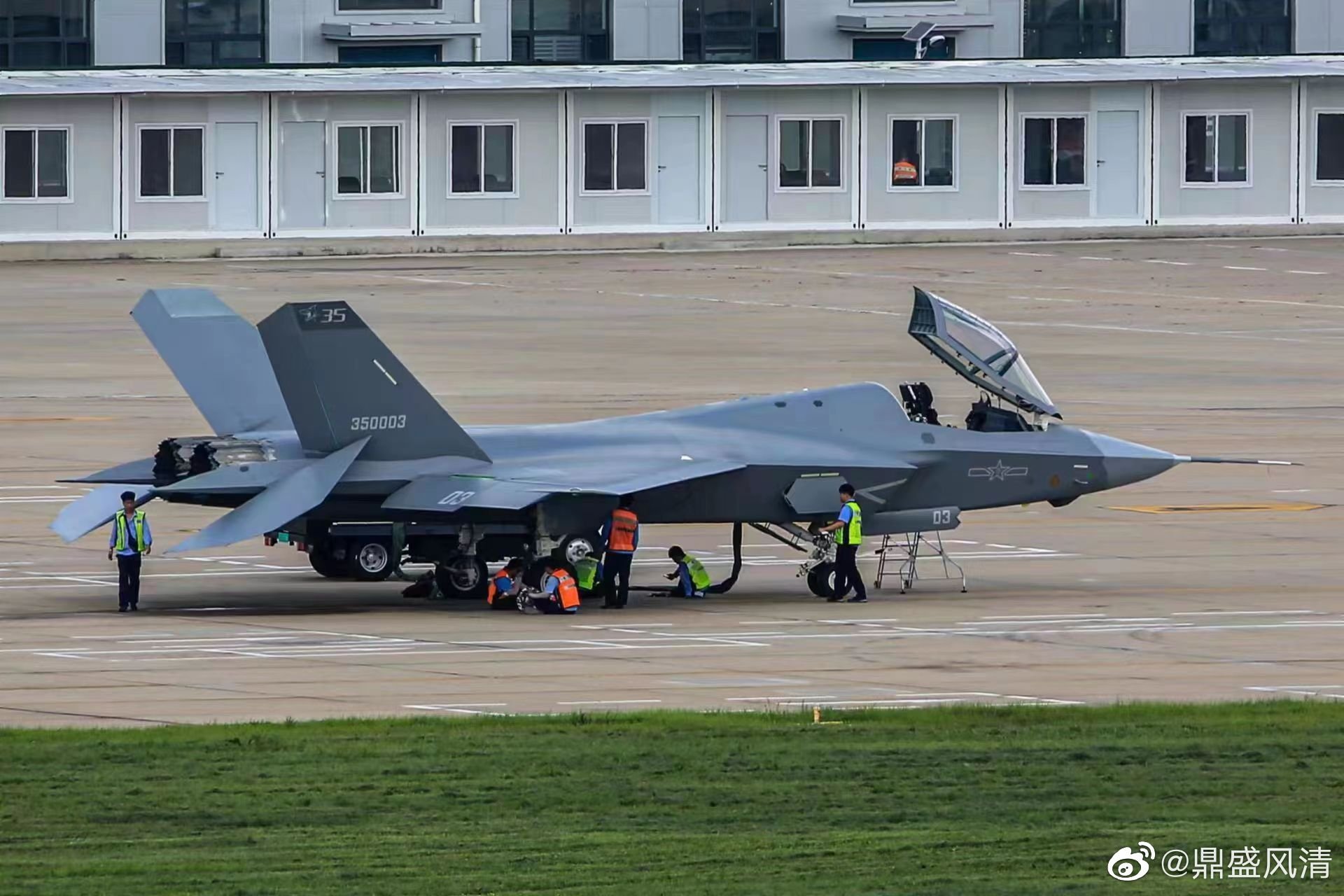
J20’s WS15 engine is claimed to develop 23650lbf.
Chinese have been developing WS15 since 2006 and only in June2022 did they manage to put a single engine, partnered with a Russian version, on a J20 to fly as they couldn’t trust to have two WS15s flying the plane.. They had an incident a couple of years ago where the engine blew up in an air show. However this year in late June they had two engines actually flying the J20. That means that they are more confident with their engines.
Chinese developed their engines taking Russian AL31FN engines as starting point. Since the Russians declined to sell the Chinese AL41 class engines as they suspected the Chinese were knocking off their AL31 engines from previous Russian planes, they were pushed in to purchasing SU35S planes. With these planes came from the Russians, a certain amount of access to the engines’ technology. But remember that the Russian engines differ from the western engines. For a start their combustion chamber is shorter (hence the smoky engines) . Russian engines hardly lasted more than 2500 hours. After the JV they formed with Safran for their local civilian jet engines, however, their engine lives improved to 4500 hour level.
Chinese still suffer with short engine lives. Until recently their WS class engines were dyeing out after 500 hours. WS15, according to a latest statement has reached 1500 hours lifespan. (This was confirmed here by a Chinese member about a year ago if memory serves) Remember how much they wanted to buy Motor Sich even though they produced engines with Soviet Era technology.
US‘s f404,F414 and F110 engines all have in excess of 8000 hours lifespan.
A plane‘s airframe makes a difference to the lifespan of an engine. The less the engine is laboured during flight, the longer its lifespan would be. Also the amount of high G manoeuvres the pilot undertakes has a great effect on the lifespan of an engine. But it is normal to expect a US engine to last in excess of 8000 hours. Just with a service life extension modernisation they can augment lifespan of F110 by another 7000hours.
It is understood that the design life of the American F15 fighter jet is about 8,000 hours, which is equivalent to 40 years. However, in fact, it needs to be overhauled every 6 years or 1,200 hours, and some parts are replaced. The principle of "conditional maintenance" is adopted. The American aero-engine also adopts the principle of "maintenance at work". Simply put, it means that whichever component fails to pass the inspection index is replaced, and the parts that pass the inspection index continue to be used, regardless of the length of use. Among them, the service life of the hot-end parts and the cold-end parts is different. The hot-end parts work in a harsh environment of high temperature and high pressure for a long time, and the service life is much lower than that of the cold end. The aeroengines used by the U.S. Air Force fighter jets may even have the entire main unit of the engine almost replaced.
Due to the rapid technological progress, the F15 will usually not remain unimproved during its 8,000-hour lifespan. At least some avionics systems and airborne radars will be upgraded, and some new modules will even be added. This will lead to an increase in the weight of the upgraded fighter, which needs to be replaced with a higher-thrust engine. If the lifespan of the engine is the same as that of the airframe, then if the fighter plane gains a lot of weight after upgrading, it will need to be replaced with an engine with higher thrust. This will cause the original engine to be forced to retire while still usable, which is not cost-effective. Therefore, the service life of military aeroengines generally does not reach 8000 hours, usually only 4000 hours. In fact, the service life of military aero-engines in European and American countries is generally only 2000-4000 hours, and the service life of a few advanced military engines can reach 6000 hours, and the service life of reduced thrust can reach 12000 hours. For example, the US-made F414EPE engine has a design life of 4,000 hours and an overhaul interval of 2,000 hours. However, if the thrust is reduced by 20%, its life can be doubled to 12,000 hours.



 )
)


